Timid Nature Pokémon: Complete Guide, Top Picks & Pro Tips
Speed can be the difference between winning and losing a Pokémon battle and timid nature Pokémon are built entirely around that edge. If your Pokémon moves first, it controls the fight.
In this complete guide, you’ll learn exactly what the timid nature does in Pokémon, which Pokémon benefit most from it, how it compares to similar natures, and how to use it effectively in both casual play and competitive battles. Whether you’re breeding for the perfect competitive team or just want to know if timid is right for your favorite Pokémon, this guide has you covered.
What Is Timid Nature in Pokémon?
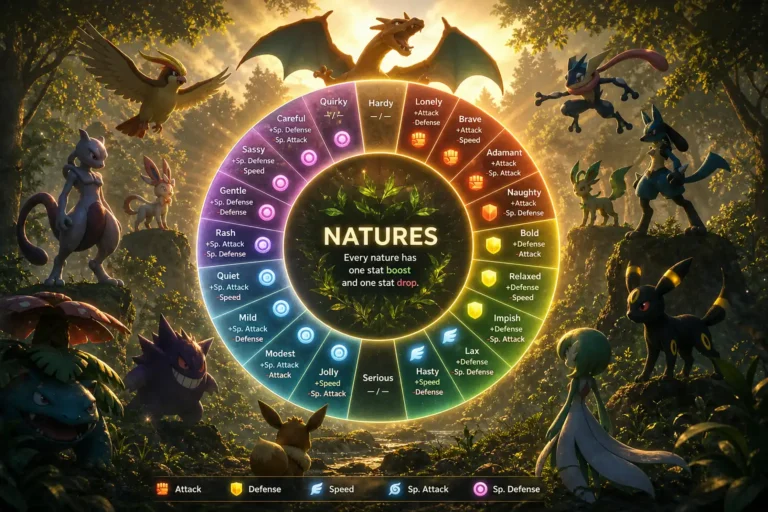
The timid nature Pokémon mechanic is one of 25 natures in the main-series games. Each nature affects a Pokémon’s stat growth boosting one stat by 10% and reducing another by 10%.
Timid nature specifically:
- ✅ Boosts Speed (+10%)
- ❌ Lowers Attack (−10%)
This makes timid nature ideal for Pokémon that:
- Never use physical moves
- Rely on speed to outpace threats
- Have naturally high Special Attack
According to Bulbapedia’s nature mechanics page, natures were introduced in Generation III and have remained a cornerstone of competitive Pokémon strategy ever since.
Quick tip: If your Pokémon’s favorite flavor is Sweet and it dislikes Spicy food in-game, it has a Timid nature.
Timid vs. Modest: Which Is Better?

This is the most debated choice in competitive Pokémon. Both natures are excellent for special attackers — but they prioritize different things.
| Nature | Boost | Reduction | Best For |
|---|---|---|---|
| Timid | Speed +10% | Attack −10% | Outspeeding threats |
| Modest | Sp. Atk +10% | Attack −10% | Maximum damage output |
When to Choose Timid
- Your Pokémon sits in a speed tier where outspeeding common threats matters
- You’re running a Choice Scarf (Timid + Scarf pushes into extreme speed)
- You face fast sweepers in the current meta
- Your Pokémon has enough base Sp. Atk to OHKO targets without the Modest boost
When to Choose Modest
- Your Pokémon is naturally fast enough without the nature bonus
- You’re using Trick Room teams (speed becomes a liability)
- You need every damage point to secure key KOs
For a deeper look at how natures interact with personality and competitive strategy, the concept mirrors real-world behavioral dynamics — much like the fascinating contrast explored in nature vs. nurture examples in real life.
Best Timid Nature Pokémon: Top Picks for Competitive Play

Not every Pokémon benefits equally from a timid nature. The best candidates share a key profile: high Special Attack, no reliance on physical moves, and a speed stat that becomes threatening with the 10% boost.
1. Gengar
Base Speed: 110 | Base Sp. Atk: 130
Gengar is the poster child for timid nature Pokémon. Its blistering speed combined with massive Special Attack means it needs every speed point it can get to outpace threats like Weavile and Dragapult in higher tiers.
- Best moves: Shadow Ball, Sludge Bomb, Focus Blast, Nasty Plot
- Why Timid: Gengar never uses physical moves, and missing even a single point of speed can cost you a match
2. Gardevoir
Base Speed: 80 | Base Sp. Atk: 125
Gardevoir is a classic special sweeper that benefits enormously from timid nature. At 80 base speed, the nature boost lets it outrun a significant portion of the metagame.
- Best moves: Moonblast, Psychic, Shadow Ball, Calm Mind
- Why Timid: Reaching 81+ effective speed tier opens up crucial matchups
3. Alakazam
Base Speed: 120 | Base Sp. Atk: 135
One of the fastest and hardest-hitting special attackers in the game. Timid nature on Alakazam is almost mandatory — its physical Attack is irrelevant, and its fragility means it must move first or not at all.
- Best moves: Psychic, Shadow Ball, Focus Blast, Encore
- Why Timid: At 120 base speed, Timid pushes Alakazam into elite speed tiers
4. Jolteon
Base Speed: 130 | Base Sp. Atk: 110
Jolteon is one of the fastest Electric-types in the franchise. Timid nature keeps it ahead of opposing sweepers and makes it a reliable revenge killer.
- Best moves: Thunderbolt, Shadow Ball, Volt Switch, Pin Missile (ignore)
- Why Timid: Never uses physical moves; needs every speed point
5. Togekiss
Base Speed: 80 | Base Sp. Atk: 120
Togekiss is a fan-favorite for both competitive and casual players. With its Serene Grace ability causing Air Slash to flinch 60% of the time, speed becomes critical you want to attack before your opponent can.
- Best moves: Air Slash, Dazzling Gleam, Aura Sphere, Nasty Plot
- Why Timid: The flinch strategy only works if Togekiss moves first
6. Tapu Koko
Base Speed: 130 | Base Sp. Atk: 95
Tapu Koko is a top-tier Electric/Fairy-type Legendary. Its Electric Surge ability sets up Electric Terrain automatically, boosting Electric moves by 30%. Timid lets it outspeed most of the meta while hitting hard through terrain boosts.
- Best moves: Thunderbolt, Dazzling Gleam, U-turn, Volt Switch
- Why Timid: At 130 base speed, Timid cements its role as a premier fast attacker
7. Dragapult
Base Speed: 142 | Base Sp. Atk: 120
Dragapult is arguably the fastest non-legendary special attacker in modern Pokémon. Timid nature makes it nearly impossible to outspeed without a Choice Scarf.
- Best moves: Shadow Ball, Dragon Pulse, Thunderbolt, Flamethrower
- Why Timid: Its already outrageous speed becomes a serious problem for opponents
For more on how Pokémon natures like Timid compare to others in competitive use, our Impish Nature Pokémon guide breaks down the defensive side of nature strategy in depth.
How to Get a Timid Nature Pokémon

Method 1: Breeding with Everstone
The most reliable method for competitive play:
- Catch or obtain a Pokémon with Timid nature
- Give it the Everstone to hold
- Breed it the offspring inherits the parent’s nature 100% of the time
Method 2: Synchronize Ability
When a Pokémon with Synchronize leads your party, wild Pokémon you encounter have a 50% chance of sharing that nature. Catch an Alakazam, Ralts, or Abra with Timid and use it as your lead.
Method 3: Mints (Generation VIII+)
From Pokémon Sword and Shield onward, Timid Mints change the stat effect of a nature without changing the nature’s name. Buy them from the Battle Tower for BP (Battle Points).
Method 4: Catching in the Wild
Check nature before catching press the Pokémon’s summary screen. If you’re hunting a specific Pokémon, use Synchronize to increase your odds dramatically.
Timid Nature Pokémon in Competitive Formats

VGC (Video Game Championships)
In VGC doubles format, speed control is everything. Timid nature is commonly seen on:
- Fast Attackers — Pokémon that threaten immediate KOs
- Support Pokémon with utility moves — Tailwind setters, redirection users
- Revenge Killers — Pokémon brought in to clean up weakened threats
Singles (Smogon)
In singles, the timid vs. modest decision is calculated carefully against the current metagame’s speed tiers. Players use damage calculators to determine whether the speed boost enables crucial outspeeds over key threats.
Speed tiers worth noting in competitive:
| Speed Stat (with Timid) | Notable Pokémon |
|---|---|
| 187 (base 115 Timid) | Latios, Latias |
| 178 (base 110 Timid) | Gengar |
| 167 (base 102 Timid) | Heatran |
| 156 (base 95 Timid) | Tapu Fini |
According to Smogon University’s competitive analysis, understanding and targeting specific speed tiers is one of the first skills serious competitive players develop.
Common Mistakes When Using Timid Nature
- Putting Timid on physical attackers — Timid cuts Attack, so physical sweepers like Garchomp or Dragonite should never run Timid.
- Overlooking Modest when speed isn’t needed — If your Pokémon already outspeeds the relevant threats, Modest gives more damage for free.
- Forgetting EV investment — A Timid nature without Speed EVs is wasted potential. Always max Speed EVs (252) on Timid sweepers.
- Ignoring the meta — If the current format is Trick Room-heavy, Timid nature can actually hurt you.
Much like understanding patterns that govern natural systems, recognizing patterns in competitive Pokémon strategy helps you make smarter decisions about which nature to choose and when.
Timid Nature and EV Spread Recommendations
For maximum effectiveness, pair timid nature Pokémon with the right EV spread:
Standard Timid Sweeper:
- 252 Sp. Atk / 252 Speed / 4 HP
- Focus on raw power and outspeeding threats
Bulky Timid Attacker (e.g., Togekiss):
- 252 HP / 4 Sp. Atk / 252 Speed
- Survives more hits while still moving first
Timid Choice Scarf User:
- 252 Sp. Atk / 252 Speed / 4 HP
- With Scarf, you’re outspeeding almost everything — focus on damage
You can also explore how the Jolly Nature guide applies the same speed-boost philosophy to physical attackers a useful comparison when building a balanced team.
FAQs
What does timid nature do in Pokémon?
Timid nature raises a Pokémon’s Speed stat by 10% and lowers its Attack stat by 10%. It’s one of the best natures for special attackers and fast utility Pokémon that never use physical moves.
Is timid or modest better for special attackers?
It depends on the specific Pokémon and metagame. Timid is better when outspeeding specific threats is critical. Modest is better when your Pokémon is already fast enough and needs more damage to secure KOs. Always run damage calculations before deciding.
Which Pokémon benefit most from timid nature?
The best timid nature Pokémon include Gengar, Alakazam, Jolteon, Dragapult, Togekiss, Tapu Koko, and Gardevoir all of which have high Special Attack, no need for physical moves, and speed stats that become threatening with the 10% boost.
Can I change a Pokémon’s nature after catching it?
In Generation VIII (Sword/Shield) and later, yes you can use a Timid Mint purchased with Battle Points from the Battle Tower. It changes the stat effect to match Timid nature without altering the nature label itself.
Does timid nature affect happiness or friendship?
No. Nature affects stat growth only. Happiness, friendship, and in-game flavor preference are separate mechanics, though the in-game “favorite flavor” for Timid is Sweet and its disliked flavor is Spicy useful for quick identification.
Is timid nature good for legendaries?
Yes many legendaries make excellent timid nature Pokémon. Mewtwo, Tapu Koko, Latios, Cresselia (for Trick Room teams, use Quiet instead), and Palkia all commonly run Timid in competitive formats to hit crucial speed benchmarks.
Conclusion
Timid nature Pokémon are the engine of speed-based competitive strategies. By boosting Speed by 10% and sacrificing the rarely-used Attack stat, timid nature transforms special attackers into first-strike threats that control the pace of every battle.
The key takeaways:
- Timid boosts Speed, lowers Attack perfect for special attackers
- Best used on Gengar, Alakazam, Jolteon, Dragapult, Togekiss, and Tapu Koko
- Breed with Everstone or use Synchronize to reliably obtain timid nature
- Use Timid Mints in Gen VIII+ to retrain existing Pokémon
- Always pair with 252 Speed EVs for maximum effectiveness
Explore our Impish Nature Pokémon guide and Jolly Nature guide to round out your understanding of all the top natures — and start winning more battles today.