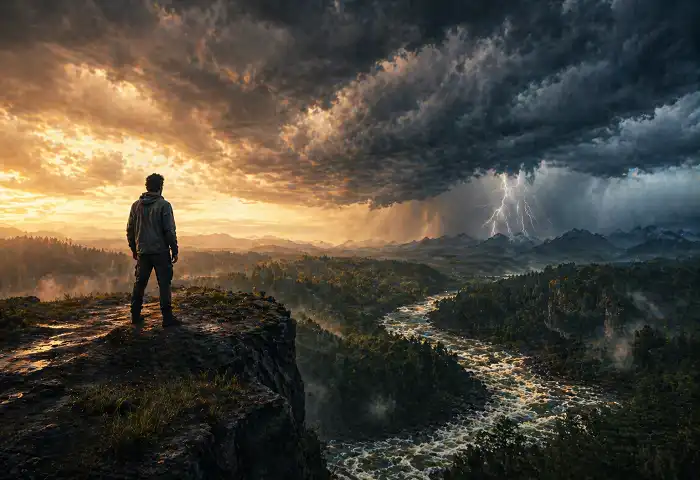
Man vs Nature: The Eternal Struggle for Survival
Since the first human being looked up at a stormy sky and felt the trembling of the earth beneath bare feet, the conflict of man vs nature has defined our existence. It is not simply a story of destruction and domination — it is the most complex relationship our species has ever navigated. We depend on nature for every breath, every drop of water, every calorie we consume. And yet, at the same time, we have spent millennia trying to reshape, redirect, and override the natural world to suit our comfort and ambition.
Man vs nature is a theme older than literature itself. It lives in ancient mythology, in the Epic of Gilgamesh, in Norse legends of gods battling giants of ice and fire. It runs through the veins of survival stories, environmental documentaries, and climate change debates. From the moment our ancestors first chopped down a tree to build a shelter, we entered into a tension with the natural world that has never fully resolved — and perhaps never will.
This blog post explores that tension in depth: its historical roots, its modern consequences, the battles humans have won, the ones nature has won back, and why finding a balance between man and nature is no longer just a philosophical question but an urgent necessity for our survival as a species.
The Origins of Man vs Nature: A Historical Perspective
To understand man vs nature today, we must trace the story back to its roots. Early humans were not conquerors of nature they were part of it. Hunter-gatherer societies lived in rhythm with seasons, migrations, and ecosystems. They hunted animals, gathered plants, and moved with the land rather than against it.
The transformation began with the Neolithic Revolution, roughly 10,000 years ago, when humans transitioned from nomadic lifestyles to settled agriculture. For the first time, man attempted to control nature on a significant scale clearing forests, redirecting rivers for irrigation, domesticating animals, and selectively breeding crops. This was the opening salvo in the long conflict of man vs nature: the moment humanity declared it would not simply accept what the earth offered, but would demand more.
As civilizations grew, so did the scale of human intervention in natural systems. The Romans drained swamps, the Chinese built massive levees along the Yellow River, and Egyptian engineers sculpted the Nile Delta for agricultural productivity. Each of these achievements represented a human victory over nature — but each also carried hidden costs, from soil exhaustion to flooding and desertification.
The Industrial Revolution of the 18th and 19th centuries escalated man vs nature into an entirely new dimension. Factories powered by coal began pumping carbon into the atmosphere. Railroads sliced through forests and prairies. Whaling fleets pushed marine mammals toward extinction. Steel plows broke open the American Great Plains, displacing native ecosystems at a rate nature had never experienced before.
By the 20th century, man vs nature had become a planetary-scale conflict, with consequences that would reshape the earth’s climate, biodiversity, and geography for millennia to come.
Nature’s Power: When the Wild Fights Back
For all our technology and ingenuity, nature reminds us regularly that it operates on a scale and timeline that dwarfs human ambition. The conflict of man vs nature is not one-sided and nature has a formidable arsenal.
Natural Disasters and Human Vulnerability
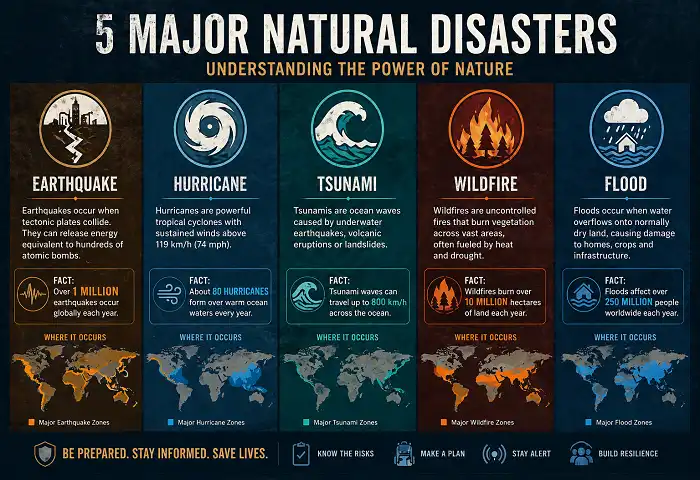
Earthquakes, hurricanes, tsunamis, volcanic eruptions, floods, and wildfires are nature’s most dramatic expressions of power. These events reveal just how fragile human infrastructure can be when nature decides to assert itself. The 2004 Indian Ocean tsunami killed over 230,000 people across 14 countries, obliterating coastal communities built over generations. Hurricane Katrina in 2005 overwhelmed one of America’s most historically significant cities. The 2011 Tōhoku earthquake and tsunami in Japan triggered a nuclear crisis, demonstrating how deeply intertwined modern civilization is with its natural surroundings.
These disasters represent moments where the scale of man vs nature shifts decisively in nature’s favor. No wall, no dam, and no emergency management system has ever made human communities completely immune to natural forces. The best we can do is prepare, adapt, and respect the raw power of the natural world.
Disease and Pandemic: Nature’s Invisible Army
The COVID-19 pandemic offered a vivid modern lesson in man vs nature. A microscopic virus — a piece of genetic material smaller than anything visible to the naked eye — brought the global economy to a standstill, killed millions, and exposed deep vulnerabilities in human society. Long before COVID-19, humanity grappled with the Black Plague, smallpox, cholera, and influenza outbreaks that periodically reshaped human history.
Many epidemiologists argue that zoonotic diseases — those that jump from animals to humans — are becoming more frequent as human expansion into wild habitats increases contact between species. Deforestation and habitat destruction push wildlife into closer proximity with human populations. In this sense, pandemic disease is one of the ways nature responds to human encroachment, making it one of the most consequential dimensions of the man vs nature conflict.
Climate: The Slow Counterattack
Perhaps the most significant way nature is fighting back against human expansion is through climate change. The burning of fossil fuels, deforestation, and industrial agriculture have altered the chemical composition of the atmosphere, trapping heat and disrupting the climate systems that human civilization was built around.
Rising sea levels threaten coastal cities. Prolonged droughts reduce agricultural yields. Intensifying storms batter communities with increasing ferocity. Wildfires in California, Australia, and the Amazon have burned millions of acres, releasing stored carbon and destroying ecosystems that took centuries to develop. In the man vs nature conflict, climate change is nature’s most comprehensive and patient response — not a single dramatic blow, but a slow, systemic shift that challenges every human system simultaneously.
Human Resilience: How We’ve Pushed Back
The story of man vs nature is also a story of extraordinary human ingenuity and resilience. Across history, humans have demonstrated a remarkable capacity to adapt to, and sometimes overcome, the most challenging natural environments on earth.
Engineering Marvels Against Natural Forces
Human civilization is dotted with engineering feats designed specifically to counter natural forces. The Netherlands, a country where much of the land sits below sea level, has built an intricate system of dikes, pumping stations, and storm surge barriers that has protected its population from the sea for centuries. The Delta Works, completed in 1997, is considered one of the Seven Wonders of the Modern World — a direct manifestation of man vs nature translated into concrete and steel.
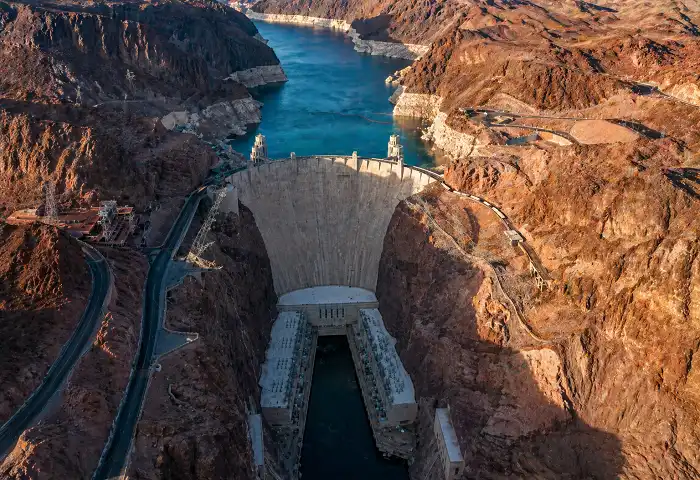
Similarly, the Hoover Dam on the Colorado River tamed a river that once flooded and shifted course unpredictably, providing water and electricity to millions in the American Southwest. China’s Three Gorges Dam, the largest hydroelectric project in history, controls flooding along the Yangtze River while generating enormous amounts of electricity. These projects represent some of humanity’s most ambitious acts of defiance against natural systems.
Medicine and the Conquest of Disease
Modern medicine has been one of humanity’s greatest victories in the man vs nature conflict. Vaccines have eradicated smallpox a disease that killed hundreds of millions throughout history — and have brought polio, measles, and many other natural killers to the edge of elimination. Antibiotics revolutionized our ability to treat bacterial infections that once carried death sentences.
Advances in surgery, pharmacology, and genetics continue to push back the biological boundaries that nature places on human life. Average life expectancy in many parts of the world has more than doubled over the past two centuries, a direct result of human ingenuity overcoming natural causes of death.
Agriculture and Food Security
The development of modern agriculture represents perhaps the most sustained and successful human effort to harness nature for our benefit. The Green Revolution of the mid-20th century, driven by scientists like Norman Borlaug, introduced high-yield crop varieties, synthetic fertilizers, and advanced irrigation that dramatically increased food production, averting the famines that were widely predicted as the global population grew.
Genetic engineering and precision agriculture are the latest chapters in this story of man vs nature, allowing farmers to grow crops that resist drought, insects, and disease with unprecedented efficiency. Vertical farming and hydroponic systems are pushing food production even further from dependence on natural soil and rainfall.
The Environmental Consequences: When Winning Becomes Losing
Here lies the deepest irony of man vs nature: many of our greatest victories over the natural world have carried the seeds of long-term defeat. When we win too decisively against nature, we undermine the very systems that keep us alive.
Biodiversity Loss
The current rate of species extinction is estimated to be between 100 and 1,000 times the natural background rate, driven almost entirely by human activity. Habitat destruction, pollution, invasive species, and climate change are pushing thousands of plant and animal species toward extinction every year. This loss of biodiversity weakens ecosystems, reducing their ability to provide the services clean water, pollination, carbon storage that human civilization depends on.
The conflict of man vs nature, pursued without restraint, threatens to leave us on a depleted planet where the natural infrastructure supporting human life has been irreparably damaged.
Soil Degradation and Water Scarcity
Industrial agriculture, while enormously productive in the short term, has depleted topsoil at alarming rates. It takes nature roughly 500 years to build an inch of topsoil; modern farming can exhaust it in decades. Freshwater aquifers that took tens of thousands of years to fill are being drawn down far faster than they can recharge.
These are not abstract environmental concerns they represent real threats to humanity’s long-term food and water security. In trying to dominate nature, we risk destroying the natural capital that our civilizations were built upon.
The Pollution Crisis
Industrial civilization produces waste on a scale that nature’s recycling systems cannot absorb. Microplastics have been found in the deepest ocean trenches and the most remote mountain snowfields. Air pollution kills millions of people every year. Chemical runoff from agriculture creates massive dead zones in coastal waters where no fish can survive.
In the man vs nature conflict, pollution is perhaps the clearest sign that human dominance over natural systems, pursued without wisdom, circles back to harm us.
The Philosophy of Man vs Nature
The tension between human civilization and the natural world has generated some of the richest philosophical thinking in human history. How we conceptualize the man vs nature relationship shapes how we treat the environment and what kind of future we build.
Dominion vs Stewardship
Many traditional Western philosophical and religious frameworks positioned humans as beings apart from and above nature, granted dominion over the natural world. This anthropocentric view — placing human interests at the center of all ethical consideration has been deeply influential in shaping the extractive relationship between industrial civilization and natural systems.
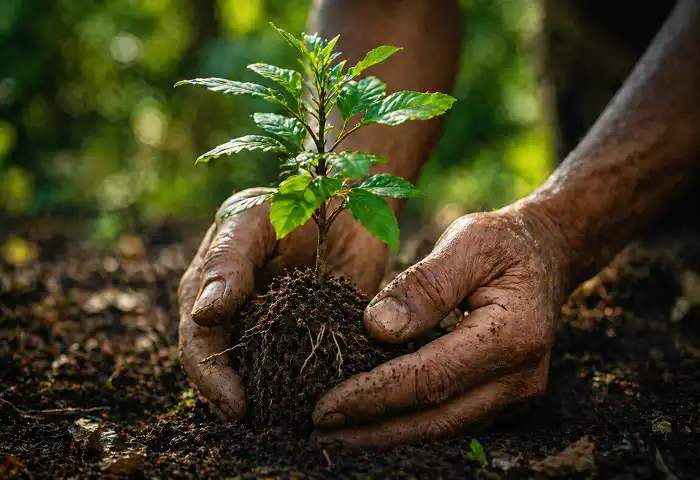
Increasingly, however, philosophers, indigenous scholars, and environmental thinkers have argued for a stewardship model: humans not as conquerors of nature, but as custodians responsible for maintaining the health of the natural systems we depend on. This shift in perspective from man vs nature to man within nature represents one of the most important intellectual transitions of our time.
Romanticism and the Sublime
The Romantic movement of the 18th and 19th centuries offered a very different perspective on man vs nature. Writers and artists like William Wordsworth, John Keats, Ralph Waldo Emerson, and Henry David Thoreau argued that nature was not an enemy to be conquered but a source of spiritual renewal and moral wisdom. For the Romantics, the wild, untamed natural world represented something humans were in danger of losing as industrialization advanced.
This Romantic tradition gave rise to the modern environmental movement, to the concept of national parks, and to the idea that wild nature has intrinsic value beyond its usefulness to human beings.
Deep Ecology and Indigenous Wisdom
Deep ecology, a philosophy developed in the 1970s, argues that all living beings have equal intrinsic value, regardless of their utility to humans. This represents a radical departure from the man vs nature framing, suggesting instead that humans are one species among many, with no inherent right to dominate or exploit the rest of life on earth.
Indigenous philosophical traditions from around the world often embody similar insights — understanding humans as embedded in, rather than elevated above, the natural world. Many indigenous land management practices reflect a sophisticated ecological knowledge built over millennia, one that maintained biodiversity and ecological health far more effectively than industrial approaches have managed.
Man vs Nature in Literature and Culture
Few themes have proven as enduring in storytelling as man vs nature. It is one of the seven classic conflicts in literature, and it appears across every culture and genre.
Ernest Hemingway’s The Old Man and the Sea is perhaps the most celebrated modern treatment of man vs nature — an aging fisherman’s epic struggle with a massive marlin becomes a meditation on human perseverance, dignity, and the relationship between humans and the natural world. Jack London’s stories, set in the brutal wilderness of the Yukon, place characters in direct physical conflict with nature at its most unforgiving.
Herman Melville’s Moby Dick transforms man vs nature into a psychological and metaphysical drama, with Captain Ahab’s obsessive pursuit of the white whale standing as one of literature’s most powerful explorations of human hubris in the face of natural power.
In contemporary culture, survival films and television shows from Into the Wild to The Revenant to Survivorman continue to fascinate audiences with their depictions of individuals pitted against the raw forces of nature. These stories speak to something deep in human psychology: an awareness of our fragility against natural forces, and an admiration for those who endure.
Finding Balance: The Future of Man and Nature
The man vs nature conflict cannot continue on its current trajectory without catastrophic consequences for both human civilization and the natural world. But there are signs that our relationship with nature is beginning to shift in more hopeful directions.
The Rise of Environmental Consciousness
The past half-century has seen a dramatic expansion of environmental awareness, from Rachel Carson’s Silent Spring in 1962 to the global climate strikes of the 2020s. Environmental protection has moved from a niche concern to a mainstream political issue in most parts of the world. International agreements like the Paris Climate Accord represent, however imperfectly, an acknowledgment that the man vs nature conflict must be managed at a global scale.
Renewable Energy and the Green Economy
The rapid growth of solar, wind, and other renewable energy technologies offers a pathway to meeting human energy needs without continuing to destabilize the climate. For the first time, economic growth and reduced environmental impact are becoming complementary rather than contradictory goals. The man vs nature conflict, at least in the energy sector, is beginning to give way to a more symbiotic model.
Rewilding and Ecological Restoration
Around the world, ambitious rewilding projects are working to restore degraded ecosystems and reintroduce lost species. In Europe, wolves and lynxes are returning to landscapes they haven’t inhabited for centuries. In the United States, dams are being removed from rivers to restore salmon habitats. In Africa, community-based conservation programs are demonstrating that protecting wildlife and supporting human communities are not opposing goals.
These projects represent a new chapter in the man vs nature story — one in which humanity uses its intelligence and resources not to subdue nature, but to repair the damage done and restore ecological balance.
Conclusion
The story of man vs nature is ultimately a story about us — about our ambitions, our fears, our ingenuity, and our capacity for both destruction and renewal. For most of human history, we framed our relationship with nature as a conflict: a battle to be won, a wilderness to be tamed, a force to be overcome.
But the evidence of the 21st century suggests that this framing has run its course. We cannot win a war against the natural systems that sustain us. Every victory in the man vs nature conflict that comes at nature’s expense is, in the long run, a defeat for humanity as well.
The most important shift of our time is from man vs nature to man within nature — understanding ourselves as participants in, and stewards of, the living systems that make our existence possible. This does not mean surrendering the benefits of civilization or abandoning human ingenuity. It means directing that ingenuity toward a different goal: not the conquest of the natural world, but its restoration and our harmonious integration within it.
The conflict of man vs nature is real, ancient, and consequential. But so is our capacity to choose a different relationship with the world that made us. And in that capacity for choice lies our best hope.