The Nature Boy Cult: Origins of Proto-Hippies
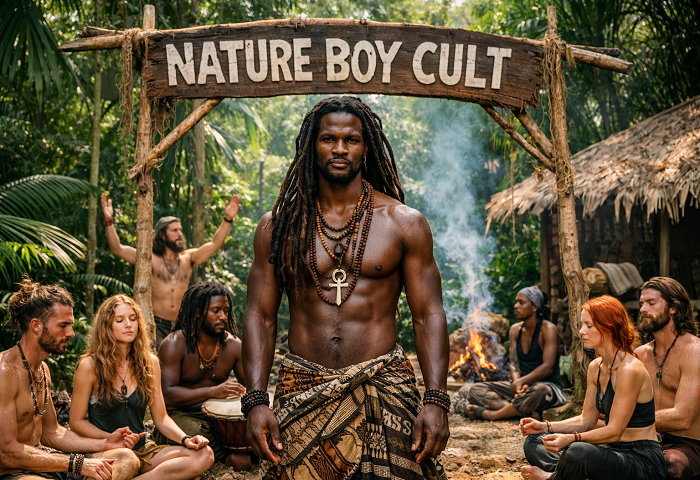
Long before the Summer of Love, long before tie-dye t-shirts and Woodstock, a small group of long-haired, barefoot wanderers were already living in the canyons of Southern California. They slept in caves, ate only raw fruit and vegetables, read Eastern philosophy, and refused to wear much more than a loincloth in the desert sun. They called themselves the Nature Boys, and today their story is often retold online as the legend of the nature boy cult.
This was not a cult in the sinister, dangerous sense. It was a loose brotherhood of dropouts, mystics, musicians and back-to-the-land dreamers who, between the 1920s and the 1950s, planted the seeds of almost everything the hippie movement would later blossom into. To understand where the 1960s counterculture really came from, you have to understand this movement first.
In this guide, we trace the full story the German roots, the desert prophets, the raw-food cafés of Los Angeles, the cave-dwelling composer who wrote a number-one hit, and the lasting influence this strange tribe had on music, fashion and philosophy. By the end you will see why the Nature Boys still matter, almost a century after they first began.
What Was the Nature Boy Cult?
The nature boy cult was a small but influential group of proto-hippies who lived mostly in Southern California, particularly around Palm Springs, Laurel Canyon and the Hollywood Hills, from roughly the late 1930s through the 1950s. Its followers rejected industrial society, preferred nature to cities, grew their hair and beards long, wore simple robes or went nude when possible, and ate only raw plant foods.
Their inspiration came from much further afield than California. This movement was a direct descendant of a German back-to-nature philosophy known as Lebensreform (“life reform”) and its sibling idea Naturmensch (“nature person”), which emerged in the late nineteenth century. Those ideas travelled across the Atlantic with German immigrants and resurfaced in the California sunshine, where they found a new audience of writers, drifters and spiritual seekers.
So while the word “cult” sometimes suggests danger, this group was really something gentler: a spiritual and dietary movement built around simplicity, vegetarianism, sunlight and self-reliance. Its members were eccentric, yes, but they were also pacifists, vegetarians and early environmentalists at a time when none of those ideas were mainstream.
The European Roots of the Nature Boy Cult
You cannot explain this movement without first talking about Germany. In the late 1800s, a rapidly industrialising Europe produced a counter-reaction. People tired of factory smoke, stiff collars and crowded cities began wandering into the countryside, preaching vegetarianism, nudism, sun-bathing and natural healing. The Wandervogel (“wandering bird”) youth movement embodied this spirit, sending young Germans hiking through forests with guitars and simple meals.
One follower of this philosophy, William Pester, emigrated from Saxony to the United States in 1906, landing eventually in the Palm Springs area of California. He built a palm-frond hut near Tahquitz Canyon, grew his hair long, ate raw food and sold walking sticks to tourists. Locals called him the “Hermit of Palm Canyon.” He is widely considered the spiritual father of the nature boy cult.
Pester’s hut became a magnet for curious visitors. Film stars from nearby Hollywood drove out to meet him. Writers wrote about him. Travellers from Europe, especially fellow Lebensreform followers, arrived to live with him for weeks or months at a time. By the 1930s, the ideas of the Nature Boys were already planted in Californian soil; they just needed a generation of Americans to water them.
Bill Pester and the Birth of a Movement
William “Bill” Pester was not a charismatic cult leader in any traditional sense. He did not seek converts, did not write a manifesto, and did not try to build a church. Yet his example living quietly in a hand-built shelter, eating dates and nuts, reading spiritual texts under the stars shaped everyone who came after him.
Pester taught by simply being. He believed that modern civilisation was killing the human spirit, that processed food was poison, and that the sun, fresh air and pure water were the real medicines. His followers took these ideas and turned them into the daily practice of the Nature Boys.
Interestingly, Pester did not live to see his philosophy explode into the Summer of Love. He passed away in 1963, just a few years before young Americans would grow their hair long, cover themselves in flowers and fill Golden Gate Park with his exact ideas. Without the quiet example set by Pester, the nature boy cult and therefore much of the 1960s would have looked very different.
The Richters and the Eutropheon Café
If Palm Springs was the desert temple of the movement, Los Angeles was its living room. In the 1940s, a German-American couple named John and Vera Richter opened a raw-food restaurant in Laurel Canyon called the Eutropheon. The name came from Greek and roughly meant “good nourishment.”
At the Eutropheon, customers could eat raw vegetable salads, nut loaves, fruit bowls and freshly pressed juices at a time when most American restaurants served meat, bread and butter. The café also became a gathering place. Long-haired young men, drifters, vegetarians and mystics all ended up at the Richters’ tables, and it is here that the nature boy cult in its classic California form really took shape.
The Richters followed Naturmensch and Lebensreform philosophy closely. Their followers were called “Nature Boys,” and many went on to become central figures in the 1960s counterculture. Without the humble salads and juice glasses served at the Eutropheon, the movement would have remained a scattered handful of hermits. With the café, it became a community.
Eden Ahbez: The Face of the Nature Boy Cult
Of all the figures associated with the nature boy cult, one stands above the rest: eden ahbez, the composer who deliberately spelled his name in lowercase because he believed only “God” and “Infinity” deserved capital letters.
Born George Alexander Aberle in Brooklyn in 1908, ahbez eventually made his way west, adopted the Naturmensch lifestyle, and became the most visible member of the Nature Boys. He wore white robes, sandals and shoulder-length hair. He camped out below the first “L” of the Hollywood Sign. He slept outdoors with his family and reportedly lived on about three dollars a week, eating mostly raw vegetables, fruits and nuts.
In 1947, ahbez approached Nat King Cole’s manager backstage at the Lincoln Theater in Los Angeles and handed him a tattered score for a song called “Nature Boy.” Cole tried it out, audiences loved it, and when the single was released in March 1948 it shot to number one on the Billboard chart, selling over a million copies and staying at the top for eight consecutive weeks.
Suddenly America wanted to know: who was this mysterious, bearded composer living under the Hollywood Sign? Life, Time and Newsweek all ran features on him. Photographers travelled to interview the barefoot mystic who had written the hit. And with that media frenzy, the Nature Boys entered mainstream American consciousness for the very first time.
Gypsy Boots and the Other Nature Boys
Eden ahbez may have been the most famous member of the nature boy cult, but he was not alone. His close friend Gypsy Boots, born Robert Bootzin, was another key figure. Gypsy Boots became a California celebrity in his own right appearing on Steve Allen’s late-night television show dozens of times, selling “smoothies” decades before the word went mainstream, and promoting raw-food nutrition wherever he could.
Other Nature Boys, such as Buddy Rose and Bob Wallace, made up the rest of the inner circle. A group of them even performed as the “Nature Boy Trio,” playing music in nightclubs around Palm Springs in the 1950s and in beatnik coffeehouses along Laurel Canyon and La Cienega Boulevards in Hollywood. The movement was never large at its peak it had perhaps a few dozen committed followers but its members were charismatic, photogenic and determined to share their ideas with a curious public.
These musicians, dancers and raw-food evangelists became the living advertising for the movement. They did not knock on doors or recruit from pulpits. They simply walked through Los Angeles in sandals, white robes and long beards and let curiosity do the rest.
The Core Philosophy of the Nature Boy Cult
What did the Nature Boys actually believe? Strip away the picturesque details the beards, the robes, the cave dwellings — and the philosophy behind the movement turns out to be surprisingly coherent.
1. Raw food is medicine. Members ate uncooked fruits, vegetables, nuts and seeds. They believed cooking destroyed vital life force, or prana. This directly anticipated today’s raw-food and plant-based movements.
2. The body belongs outdoors. Regular sunlight, fresh air, long walks and sleeping under the stars were considered essential. Members saw the body as a sacred vehicle that needed nature, not shelter.
3. Eastern philosophy holds answers the West has forgotten. Many in the nature boy cult studied the teachings of Jiddu Krishnamurti, Paramahansa Yogananda and other Indian gurus who were active in Southern California during the 1930s and 1940s. Meditation, yoga and vegetarianism all entered the movement through these teachers.
4. Modern life is spiritually poisonous. The Nature Boys rejected money-hoarding, factory food, industrial medicine and wage slavery. They saw them as forms of self-imposed imprisonment.
5. Love is the final answer. The entire philosophy of the group is summarised in a single line from ahbez’s most famous song: “The greatest thing you’ll ever learn is just to love and be loved in return.”
Taken together, these five ideas formed a quiet but radical worldview. It was vegetarianism before vegetarianism was trendy, environmentalism before Earth Day, and yoga before yoga studios. Everything the wellness industry sells today, the Nature Boys were already living in 1945.
The Hollywood Sign, the Cave, and the Myth
Part of the reason the Nature Boys still fascinate people is the sheer visual drama of the lives its members led. Eden ahbez actually did live, at various times, in a cave near Palm Springs and under the first “L” of the Hollywood Sign. He actually did wear white robes. He actually did eat dates and nuts.
When Nat King Cole’s team finally tracked him down in 1948 to pay the rights to “Nature Boy,” ahbez reportedly had no fixed address. The scene is almost too perfect to be true: a barefoot mystic, found on a hillside, being handed thousands of dollars by a record label. He collected the check, gave much of the money to friends, and kept living the way he always had.
This is why the nature boy cult has survived in memory far better than many larger counterculture groups: its story is simply unforgettable. Scriptwriters, novelists and documentarians keep returning to it, and new generations keep re-discovering the strange band of Californians who lived like medieval saints beside Hollywood film studios.
“Nature Boy” the Song and Its Cultural Afterlife
The song “Nature Boy” gave the movement a voice that reached far beyond California. Since Nat King Cole’s 1948 recording, the song has been covered by hundreds of artists, including Frank Sinatra, Ella Fitzgerald, John Coltrane, Miles Davis, Sarah Vaughan, James Brown, David Bowie, Aaron Neville, Lady Gaga and Tony Bennett. It was added to the Grammy Hall of Fame in 1999.
The song also featured in a 1948 RKO film, The Boy with Green Hair, and later in Baz Luhrmann’s Moulin Rouge! in 2001, where David Bowie’s haunting version introduced the story of the nature boy cult to a whole new generation of cinemagoers.
Beyond its direct covers, “Nature Boy” left fingerprints on an extraordinary range of music. Paul McCartney credited it as the inspiration for his song “Mother Nature’s Son.” Brian Wilson of the Beach Boys was photographed with ahbez in the studio during the Smile sessions. Donovan travelled to Palm Springs specifically to meet ahbez, and the two wanderers reportedly shared an almost “telepathic” conversation.
In this way, the musical influence of the Nature Boys reached into rock, pop, jazz and soul — and it is still being rediscovered today. In 2021, Swedish exotica band Ìxtahuele released Dharmaland, an album built from sheet music ahbez composed in the 1960s but never recorded. In 2024, filmmaker Brian Chidester continued working on As the Wind: The Enchanted Life of Eden Ahbez, a documentary that has kept the legend of this movement alive for a new audience.
How the Nature Boy Cult Shaped the Hippie Movement
Perhaps the most significant legacy of this movement is the way it prefigured the hippie wave by a full generation. Look at the defining features of 1960s counterculture long hair, beards, vegetarian food, yoga, meditation, communes, anti-war pacifism, simple clothing, living close to the land, rejecting middle-class conformity and you find that every single one was already practised by the Nature Boys in the 1940s.
The direct influence is traceable. Gypsy Boots spent the 1960s on television, smoothies in hand, preaching the gospel of raw food to a nation of young baby boomers who were suddenly ready to listen. Eden ahbez’s music found its way into the hands of the Beatles and the Beach Boys. The Laurel Canyon music scene of the 1960s, which produced Joni Mitchell, Crosby, Stills & Nash and the Mamas and the Papas, literally grew up in the same canyons where the Nature Boys had walked a decade earlier.
When commentators call the Nature Boys “the grandparents of the hippies,” they are not exaggerating. The nature boy cult was, effectively, the dress rehearsal for 1967. Everything the flower children later embraced, the Nature Boys had already been practising quietly for decades.
The Nature Boy Cult in Today’s Wellness Culture
Fast forward to today. Walk into any modern city and you will see green smoothies, yoga studios, meditation apps, raw-food cafés, sustainable clothing lines and Instagram influencers promoting “digital detox” retreats. Most consumers have no idea that virtually every idea driving the multi-billion-dollar wellness industry was first practised by the nature boy cult.
The raw-food movement began, in its modern American form, at the Richters’ Eutropheon café. Yoga in the United States was first taught by the Indian gurus who inspired the Nature Boys. Veganism and plant-based eating became mainstream only decades after they were doing it out of paper bags in the desert.
Even the modern aesthetic of the “forest bather” or “digital minimalist” long hair, linen clothes, bare feet in grass, Instagrammable cabin, intentional simplicity looks uncannily like a slicker, wealthier version of the original Nature Boys. What started as a philosophy for cave-dwelling mystics has become a lifestyle sold on Etsy and in luxury resorts.
That is the strangest irony of the movement’s afterlife. A tribe of dropouts who rejected commerce and consumerism has ended up as the unacknowledged foundation of some of the most profitable wellness brands on earth.
Criticism and Controversies
No honest account of this movement can ignore its difficult edges. William Pester, for all his gentle hermit persona, was jailed in the 1940s on charges related to a minor. Some associates of the movement had complicated or troubling personal histories that would not be overlooked today. Eden ahbez himself faced a plagiarism lawsuit from Yiddish composer Herman Yablokoff, who argued convincingly that the melody to “Nature Boy” owed a great deal to his own song “Shvayg mayn harts” (“Be Still My Heart”). The matter was settled out of court.
Critics also note that the nature boy cult, for all its idealism, was overwhelmingly white, male and privileged in the sense that its members could afford to “drop out” of a society that had already given them protection and mobility. Living in a cave in Palm Springs is a very different experience depending on who you are when the authorities show up.
These complications do not erase the cultural contributions of the Nature Boys, but they are an important part of a truthful retelling. Movements are made by humans, and humans are complicated.
Why the Nature Boy Cult Still Matters
Almost eighty years after Nat King Cole’s “Nature Boy” topped the charts, the story of the nature boy cult continues to speak to something in the modern imagination. At a time when climate anxiety, burnout, social-media fatigue and overconsumption dominate the cultural conversation, the idea of walking away from it all — choosing sunlight over screens, fruit over fast food, forests over feeds feels strangely urgent again.
The movement offers no perfect blueprint. Most of us cannot actually move into a cave near Palm Springs, and the realities of the Nature Boys’ lives were harder, poorer and stranger than romantic retellings admit. But the core invitation remains powerful: live simply, eat close to the earth, learn from spiritual traditions, and do not mistake busyness for meaning.
That invitation, more than any single song or photograph, is why the Nature Boys continue to inspire new documentaries, tribute albums and magazine articles every few years. They were ahead of their time. They may still be ahead of ours.
FAQs
Is the nature boy cult a real religious cult?
No. Despite the dramatic name that has grown up around the group online, the nature boy cult was never an organised religious cult. It was a loose back-to-nature movement practising raw-food vegetarianism, nature worship and Eastern-inspired spirituality in mid-twentieth-century California.
Who founded the nature boy cult?
William “Bill” Pester, a German immigrant who settled in the Palm Springs area in the early 1900s, is widely regarded as the founder of the American nature boy cult. He drew his ideas from the German Lebensreform and Naturmensch movements.
Who was the most famous member of the nature boy cult?
Eden ahbez, the composer of “Nature Boy,” is by far the most famous member. His 1948 hit, recorded by Nat King Cole, brought the movement to a global audience and cemented its place in music history.
Did the nature boy cult influence the hippie movement?
Yes, directly and significantly. The diet, grooming, philosophy and lifestyle of 1960s hippies were almost all pre-figured by the nature boy cult in the 1930s and 1940s. Many historians call the Nature Boys the “grandparents of the hippies.”
Where did the nature boy cult live?
The movement was centred in Southern California, particularly in Palm Springs, Laurel Canyon, the Hollywood Hills and the surrounding desert and canyons. The Richters’ Eutropheon café in Los Angeles was a key gathering point.
Can you visit anything related to the Nature Boys today?
Yes. Palm Springs still celebrates its bohemian history, Laurel Canyon remains a pilgrimage spot for music lovers, and the documentary work of Brian Chidester has made many recordings and photographs available online. Renewed releases of eden ahbez’s music are easy to find on streaming services
Final Thoughts
The nature boy cult is one of those cultural stories that sounds made up until you read the sources and realise every detail is true. Cave-dwelling composers, raw-food cafés in 1940s Laurel Canyon, barefoot mystics dropping off number-one hits at the stage door, proto-hippies camping under the Hollywood Sign — this is not a novel, this is American history.
And yet for all its strangeness, the movement leaves behind something genuinely useful. It reminds us that counterculture is not a twentieth-century invention, that wellness trends have deep roots, and that a handful of committed people living by their values can shape the music, food and imagination of a whole civilisation.
Whether you come to the story through a Nat King Cole record, a Moulin Rouge scene, a wellness retreat, or a deep dive into Laurel Canyon history, the Nature Boys deserve a place in your understanding of modern life. Its followers were not saints, and they were not a real cult in any dangerous sense. They were stubborn, strange, kind, sunburned dreamers who decided, against all evidence, that the simplest life might also be the richest and the world, eventually, began to agree with them.