Best National Parks for Hiking: 25 Must-Visit Trails for Every Explorer
Choosing the best national parks for hiking comes down to trail variety, scenery, and how well the park fits your skill level. I’ve hiked across the US for years with a camera on my back. This guide covers 25 trails worth the trip in 2026.
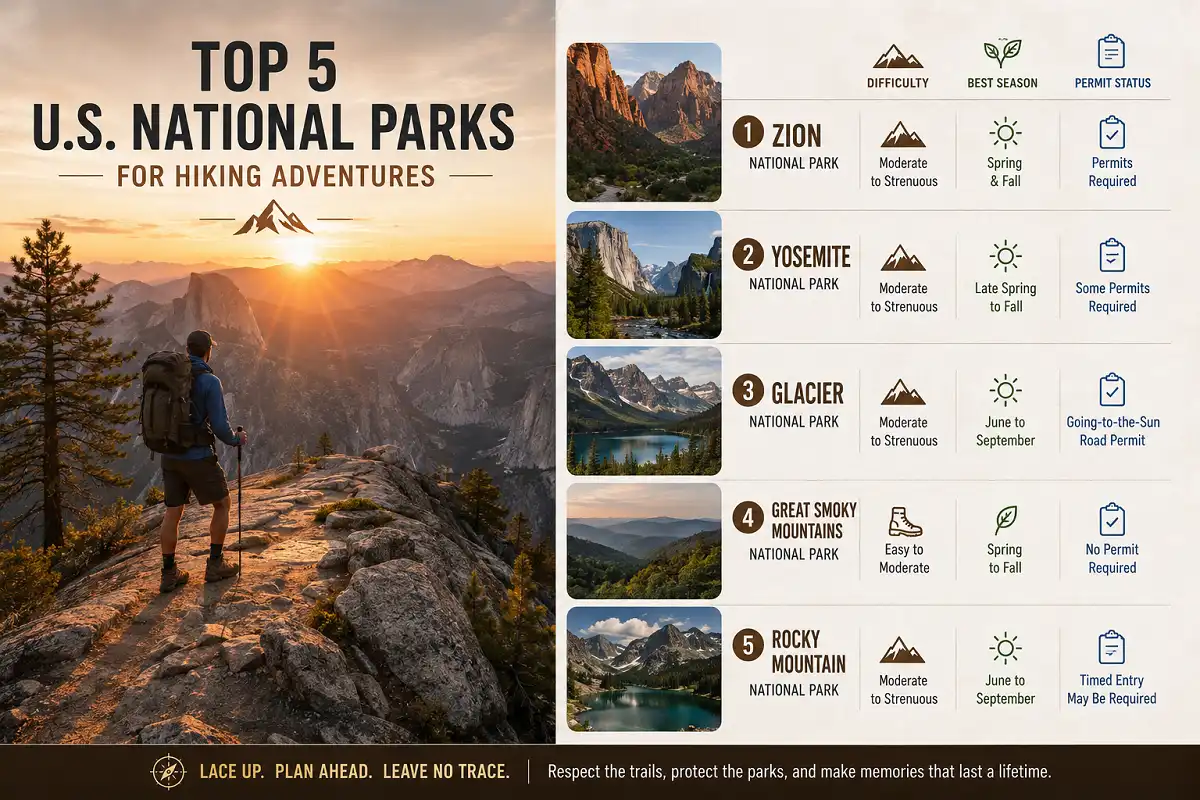
The best national parks for hiking include Zion, Yosemite, Glacier, Great Smoky Mountains, and Rocky Mountain. Each offers marked trails for beginners and experts, strong safety infrastructure, and scenery that pays back every mile you walk.
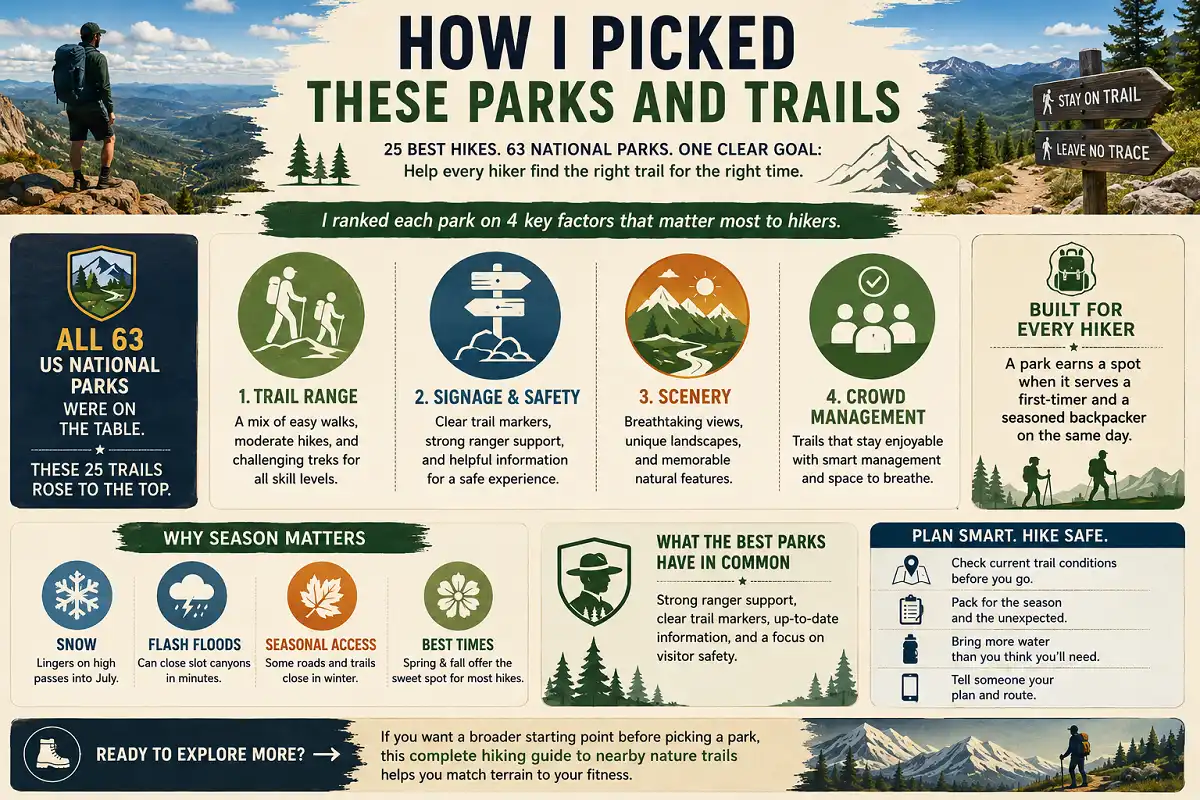
How I Picked These Parks and Trails
I ranked each park on four things: trail range, signage and safety, scenery, and crowd management. A park earns a spot on any list of the best national parks for hiking when it serves a first-timer and a seasoned backpacker on the same day. All 63 US national parks were on the table. These 25 trails rose to the top.
Trail conditions change fast. Snow lingers on high passes into July. Flash floods close slot canyons in minutes. I note the season for each trail so you plan around real conditions, not a brochure photo. The best national parks for hiking all share strong ranger support and clear trail markers, which is exactly what a new hiker needs. If you want a broader starting point before picking a park, this complete hiking guide to nearby nature trails helps you match terrain to your fitness.
Best National Parks for Hiking in the West
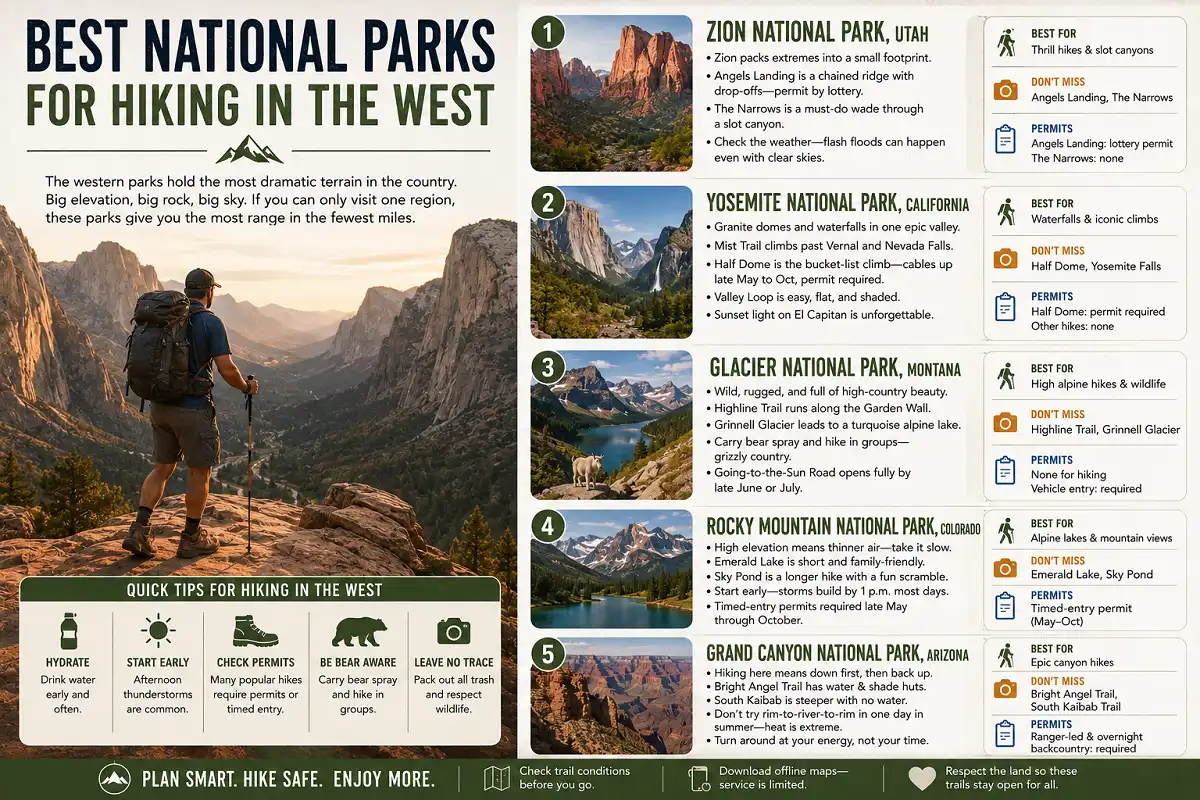
The western parks hold the most dramatic terrain in the country. Big elevation, big rock, big sky. If you can only visit one region, the best national parks for hiking in the West give you the most range in the fewest miles.
Zion National Park, Utah
Zion is a top pick for the best national parks for hiking because it packs extremes into a small footprint. Angels Landing is the headliner. The final half mile follows a chained spine with drop-offs on both sides. You need a permit for it now, issued by lottery. The Narrows is the other must-do. You wade upriver through a slot canyon, sometimes waist-deep. Rent neoprene socks and a walking stick in spring runoff. Check the weather before you enter. A distant storm can flood the canyon under clear skies above you.
Yosemite National Park, California
Yosemite gives you granite domes and waterfalls on the same loop. Mist Trail climbs past Vernal and Nevada Falls on stone steps slick with spray. Half Dome is the bucket-list climb. Cables go up in late May and come down in October, and you need a permit. For an easier day, the Valley Loop stays flat and shaded. Firsthand, the light on El Capitan an hour before sunset is the best free show in the park. Reserve lodging months out. Beds inside the valley book fast.
Glacier National Park, Montana
Glacier holds the wildest high country in the lower 48. The Highline Trail runs along the Garden Wall with mountain goats often on the path. Grinnell Glacier is the classic out-and-back to a turquoise lake. Carry bear spray and know how to use it. This is grizzly country, and rangers mean it when they say hike in groups. The Going-to-the-Sun Road opens fully by late June or July, so early-season visitors face closed sections.
Rocky Mountain National Park, Colorado
Rocky Mountain sits high, so altitude matters here. Emerald Lake is a short, family-friendly walk past three alpine lakes. Sky Pond rewards a longer effort with a scramble past a waterfall. Start early. Afternoon thunderstorms roll in most summer days by 1 p.m. Give yourself a day at elevation before a big climb. Timed-entry permits run from late May through October, so book a slot ahead of your trip.
Grand Canyon National Park, Arizona
The Grand Canyon flips normal hiking logic. You descend first, then climb out tired. Bright Angel Trail has water stations and shade huts. South Kaibab is steeper with wide-open views and no water. Never try rim-to-river-to-rim in a single summer day. The heat down low tops 100 degrees and rescues are common. Turn around at the halfway point of your energy, not your time.
Best National Parks for Hiking in the East
Eastern parks trade altitude for forest, mist, and quiet. The grades are gentler, and the seasons show off. Among the best national parks for hiking, these eastern picks are the friendliest for a first big trip. Fall color alone makes them worth a long weekend.
Great Smoky Mountains National Park, Tennessee and North Carolina
The Smokies rank among the best national parks for hiking for one simple reason: access. Alum Cave Trail climbs to Mount LeConte past rock arches and bluffs. Andrews Bald is an easy walk to an open meadow with layered ridge views. It is the most visited national park in the country, drawing more than 12 million recreation visits a year, as documented on Wikipedia’s Great Smoky Mountains page. Go midweek to dodge the crowds.
Acadia National Park, Maine
Acadia puts ocean and granite side by side. Precipice Trail uses iron rungs bolted into a cliff face. It closes in spring for falcon nesting. The Ocean Path is the calm alternative, hugging the shore past Thunder Hole. Cadillac Mountain gets the first sunrise in the US from October to March. People line up for it, and a vehicle reservation is required to drive up at dawn.
Shenandoah National Park, Virginia
Shenandoah runs along the Blue Ridge with Skyline Drive as its spine. Old Rag is the toughest day hike, a rock scramble that needs both hands. Dark Hollow Falls is a short, steep walk to a cascade. On a dawn hike here in fall, the fog fills the valleys and burns off slow. It’s my favorite eastern sunrise. Black bears are common, so store food properly and keep your distance.
New River Gorge National Park, West Virginia
New River Gorge became a national park in 2020, the newest in the system. The Endless Wall Trail follows a clifftop with climbers below. Long Point gives you the postcard shot of the famous bridge. The trails here stay uncrowded compared to older eastern parks. That quiet is part of the draw, and the fall foliage rivals anywhere in the region.
Best National Parks for Hiking Year-Round
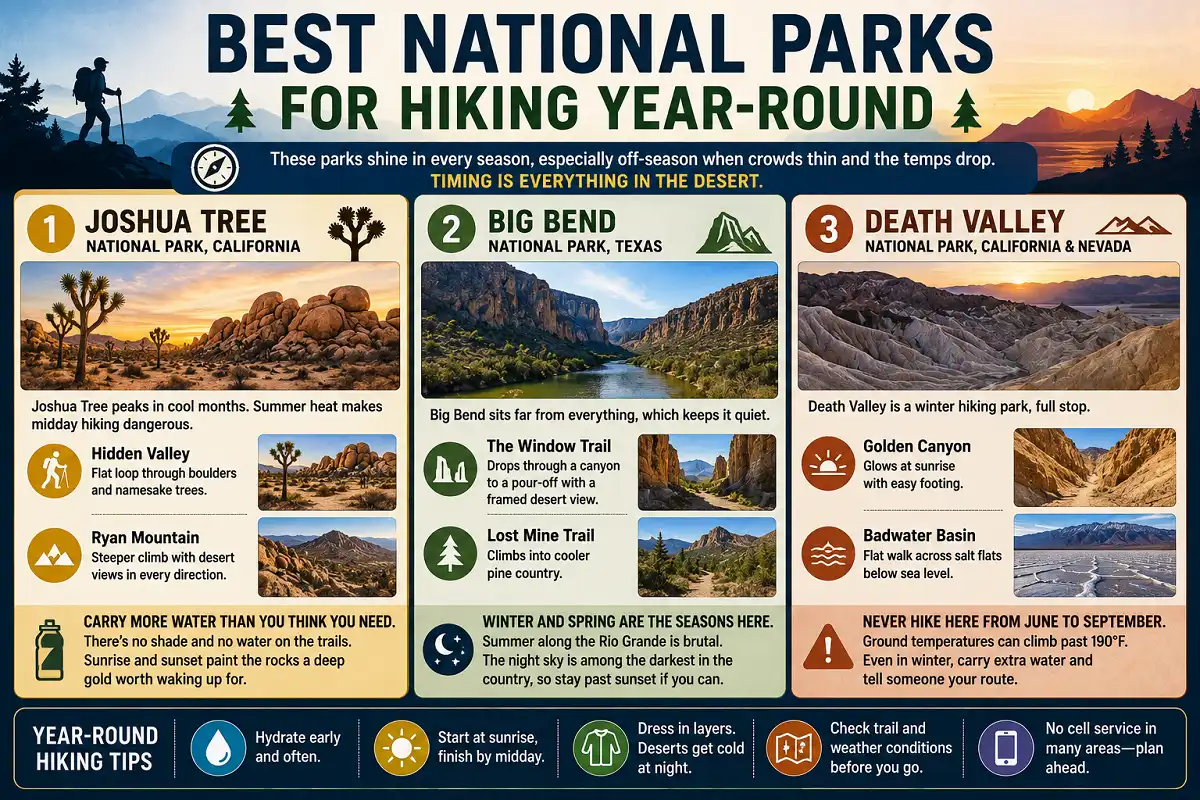
Some parks shine in winter when the crowds thin and the heat drops. These belong on any short list of the best national parks for hiking off-season. Timing is everything in the desert.
Joshua Tree National Park, California
Joshua Tree peaks in cool months. Summer heat makes midday hiking dangerous. Hidden Valley is a flat loop through boulders and namesake trees. Ryan Mountain is a steeper climb with desert views in every direction. Carry more water than you think you need. There’s no shade and no water on the trails. Sunrise and sunset paint the rocks a deep gold worth waking up for.
Big Bend National Park, Texas
Big Bend sits far from everything, which keeps it quiet. The Window Trail drops through a canyon to a pour-off with a framed desert view. Lost Mine Trail climbs into cooler pine country. Winter and spring are the seasons here. Summer along the Rio Grande is brutal. The night sky is among the darkest in the country, so stay past sunset if you can.
Death Valley National Park, California and Nevada
Death Valley is a winter hiking park, full stop. Golden Canyon glows at sunrise with easy footing. Badwater Basin is a flat walk across salt flats below sea level. Never hike here from June to September. Ground temperatures can climb past 190 degrees. Even in winter, carry extra water and tell someone your route.
Best National Parks for Hiking With Kids
Family hikes need short distances, safe footing, and a payoff kids can see. These parks rank high on any list of the best national parks for hiking with children. They deliver without a fight on the trail. Keep the first outing short and let the win build appetite for more.
Bryce Canyon National Park, Utah
Bryce is built for young hikers. The Queen’s Garden Trail drops gently among orange hoodoos. Pair it with part of the Navajo Loop for a short, scenic circuit. The rim sits at 8,000 feet, so kids may feel the altitude. Keep the pace slow and pack snacks. The hoodoos look like a storybook, which keeps young legs moving.
Olympic National Park, Washington
Olympic holds three worlds in one park: coast, rainforest, and alpine. The Hoh Rain Forest Hall of Mosses is a flat, easy loop under dripping trees. Hurricane Ridge offers open meadows with mountain views. Sol Duc Falls is a short walk to a photogenic cascade. Rain gear is not optional here. Tide pools along the coast add a second adventure at low tide.
Mammoth Cave National Park, Kentucky
Mammoth Cave splits its trails between underground and surface. Ranger-led cave tours suit families, with paved paths in parts. Above ground, the Green River Bluffs Trail is a gentle forest walk. The cave stays 54 degrees year-round. Bring a light jacket even in August. Book cave tours ahead, since popular time slots sell out in summer.
What Every Hiker Should Pack
Good gear turns a hard trail into a good day. I carry the same core kit on every hike, from a flat family loop to an exposed ridge.
Water comes first. Plan on half a liter per hour, more in heat. Footwear matters next. Trail runners work for dry, packed paths, but rocky scrambles need stiff boots with ankle support. A trekking pole saves your knees on steep descents. Add a rain shell, a headlamp, and a paper map, since cell signal dies in most backcountry. Pack a small first-aid kit and know how to use it.
I also keep a small camera ready on every route. If you shoot while you walk, these nature photography field notes cover light and settings that hold up outdoors. Good photos need good light, and dawn on the trail delivers both.
Trail Safety and Leave No Trace
Safety and stewardship keep these places open. The rules are simple and they work, so build them into every hike.
Tell someone your route and return time. Check the weather the morning of, not the night before. Turn back when conditions change. No summit is worth a rescue. Pack out everything you pack in, including food scraps. Stay on marked paths to protect fragile ground. These habits come from the Leave No Trace framework, which every serious hiker follows. For lower-traffic routes away from the busiest parks, these quiet hiking trail ideas point you toward less-traveled ground.
How to Beat the Crowds at Popular Parks
The best national parks for hiking draw big numbers, especially in summer. Timing fixes most of it. Arrive before 7 a.m. or start after 3 p.m. Midweek beats weekends every time. Shoulder seasons, late spring and early fall, give you good weather with half the people.
Many parks now run reservation or permit systems in peak months. Zion, Rocky Mountain, Acadia, and others require timed entry or shuttle booking on busy days. Check the park website a few weeks out. Rules change each season, and a missing permit can end a trip at the gate. Booking early is the single easiest way to hike the best national parks for hiking without the wait.
When Is the Best Time to Visit?
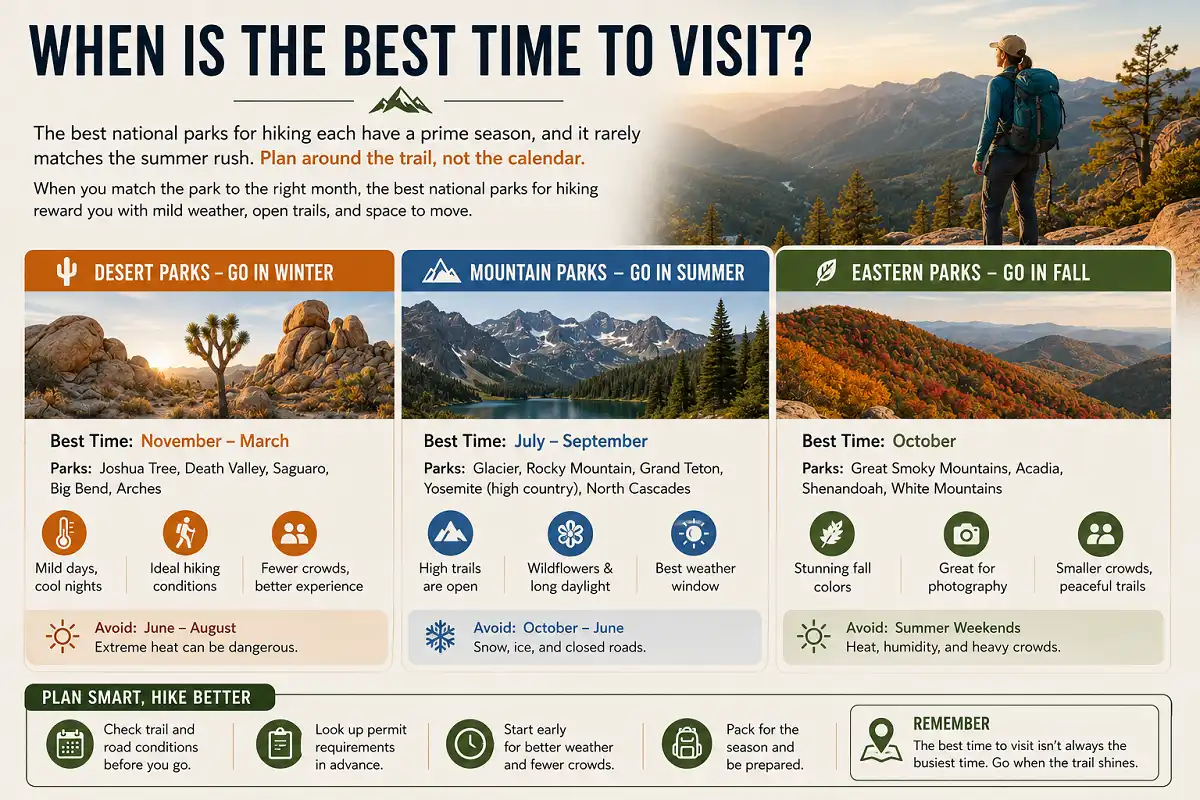
The best national parks for hiking each have a prime season, and it rarely matches the summer rush. Desert parks like Joshua Tree and Death Valley peak from November through March. Mountain parks like Glacier and Rocky Mountain open their high trails only from July into September. Eastern parks hit their stride in October, when the crowds thin and the leaves turn.
Plan around the trail, not the calendar. A high pass buried in snow ruins a July trip, while a desert loop in July can be deadly. When you match the park to the right month, the best national parks for hiking reward you with mild weather, open trails, and space to move.
What I’d Tell a Friend
Pick the park that matches your season and your legs, not just the famous name. Zion and Yosemite earn the hype, but the Smokies, Acadia, and New River Gorge give you room to breathe. Start with a trail below your limit, carry water and a map, and go early. The best national parks for hiking reward the hikers who plan ahead. Lace up and go see them in 2026.