
Success Mindset: What It Is and How to Build One
A success mindset is the set of thinking patterns that push you to keep working toward a goal even when the results are slow. It’s not talent or luck. It’s a habit of thought you can train.
A success mindset means you treat effort, setbacks, and feedback as tools instead of threats. You build one through daily habits: clear goals, honest self-review, and consistent action, not one big mental shift.
Why a Success Mindset Matters More Than Raw Talent
Talent gets you a fast start. A success mindset keeps you moving after the start wears off. I’ve watched hikers with the best gear quit halfway up a trail because the climb got harder than they expected. I’ve also watched beginners with cheap boots finish because they treated the tough stretch as part of the plan, not a sign to stop.
The same pattern shows up in work, fitness, and creative projects. People with this mindset expect friction. They plan for it. People without one read friction as proof they picked the wrong goal.
Research on grit and achievement backs this up. Long-term success correlates more closely with sustained effort and self-regulation than with raw ability. It’s what keeps effort sustained past the point where motivation runs out.
The Core Traits of a Success Mindset
Growth Over Fixed Thinking
Is skill something you’re born with, or something you build? This trait treats ability as something built through repetition, not a fixed gift. This single belief changes how you respond to failure. A fixed thinker sees a poor result and thinks “I’m not good at this.” A growth thinker sees the same result and thinks “I haven’t practiced this enough yet.”
Ownership of Outcomes
A success mindset includes taking responsibility for results, even the ones shaped by bad luck or timing. This isn’t about blaming yourself. It’s about staying focused on what you can control: your prep, your response, your next move. Blaming outside factors feels better in the moment. It also stops you from adjusting anything.
Comfort With Discomfort
People with a strong success mindset don’t wait to feel ready. They act while still uncertain, because waiting for full confidence usually means waiting forever. On early morning shoots, I never feel fully ready for the cold or the long wait for the right light. I go anyway, because the discomfort passes and the shot doesn’t happen without it.
How to Build a Success Mindset Step by Step
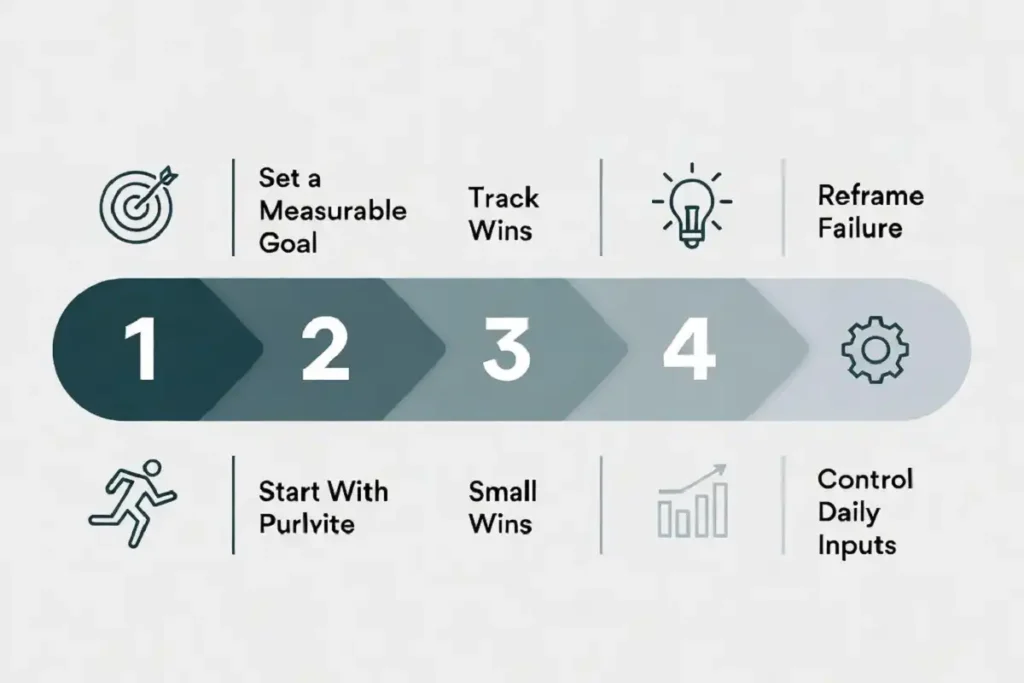
Start Your Morning With Purpose
How you open the day sets the tone for how you think the rest of it. A rushed, reactive morning trains a reactive mindset. Ten quiet minutes to review your top priority does more for this outlook than an hour of scrolling motivational content. If you want a fuller routine to work from, these ways to start your morning with intention lay out a simple structure you can adapt.

Set Goals You Can Actually Measure
Vague goals like “be more successful” give your brain nothing to act on. Specific, measurable goals give that kind of thinking something concrete to work toward. Instead of “get in shape,” use “run two miles without stopping by September.” Instead of “grow the business,” use “add ten new clients this quarter.”
Track Small Wins Every Day
A five-minute nightly log of what went right builds evidence for your brain that progress is happening. This matters because this habit of thought runs on proof, not just belief. Write down one thing you did well, even on a bad day. Over weeks, this log becomes a record you can point to when doubt creeps in.

Reframe Failure as Data
Every setback carries information. A missed deadline tells you something about your planning. A rejected pitch tells you something about your pitch. People who think this way ask “what does this tell me?” instead of “what does this say about me?” That question alone changes the next attempt.
Control Your Daily Inputs
What you read, watch, and hear shapes how you think without you noticing. Feeding your mind with people who model persistence and clear thinking reinforces that mindset faster than willpower alone. A handful of quotes built around real achievement can work as a quick reset when your focus slips mid-afternoon.
Common Mistakes That Undermine a Success Mindset
Chasing motivation instead of building routine is the biggest one. Motivation fades. Routine doesn’t need it. If your plan depends on feeling inspired every day, it will break within a week.
Comparing your week five progress to someone else’s year ten result is another common trap. It skips the years of failed attempts you didn’t see. This mindset stays anchored to your own baseline, not someone else’s highlight reel.
Treating rest as weakness also backfires. Burnout kills consistency faster than any single setback. Recovery is part of the plan, not a break from it.
How Long Does It Take to Build a Success Mindset?
Most people notice a real shift in outlook within six to eight weeks of consistent daily practice. The traits themselves, ownership, growth thinking, and comfort with discomfort, strengthen with repetition, similar to how a muscle adapts to regular training. Small daily habits, tracked and repeated, build a success mindset faster than any single insight or breakthrough moment.
If you’re looking for small daily shifts to layer on top of what’s outlined here, this breakdown of everyday mindset adjustments covers habits that pair well with the steps above.
FAQs

Can anyone develop a success mindset, or is it fixed by personality?
What's the difference between a success mindset and positive thinking?
What I’d Tell a Friend
Building a success mindset isn’t about waking up one day and thinking differently. It’s stacking small, repeatable choices, a measurable goal, a tracked win, an honest look at a setback, until they become how you naturally respond. Start with one habit from this list this week. Add the next one once the first feels automatic.