Nature Pokémon: The Complete Guide to Every Nature
What if a single word just one nature could be the difference between winning and losing a Pokémon battle? That’s exactly the power hidden inside the nature Pokémon system, and most trainers never use it to its full potential.
In this complete guide, you’ll learn what nature Pokémon are, how every nature affects your Pokémon’s stats, which natures are considered the best for competitive play, and how to find or breed the nature you need. Whether you’re a casual player or a hardcore competitor, understanding nature Pokémon mechanics will instantly make you a smarter trainer.
What Are Nature Pokémon? A Simple Explanation
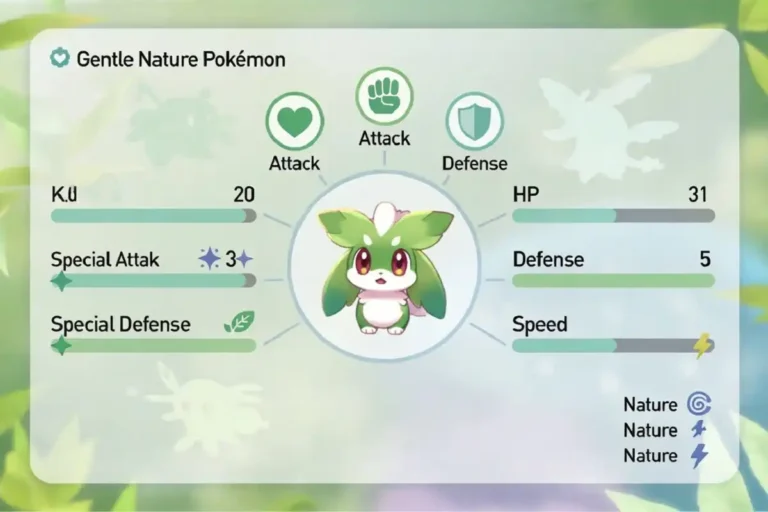
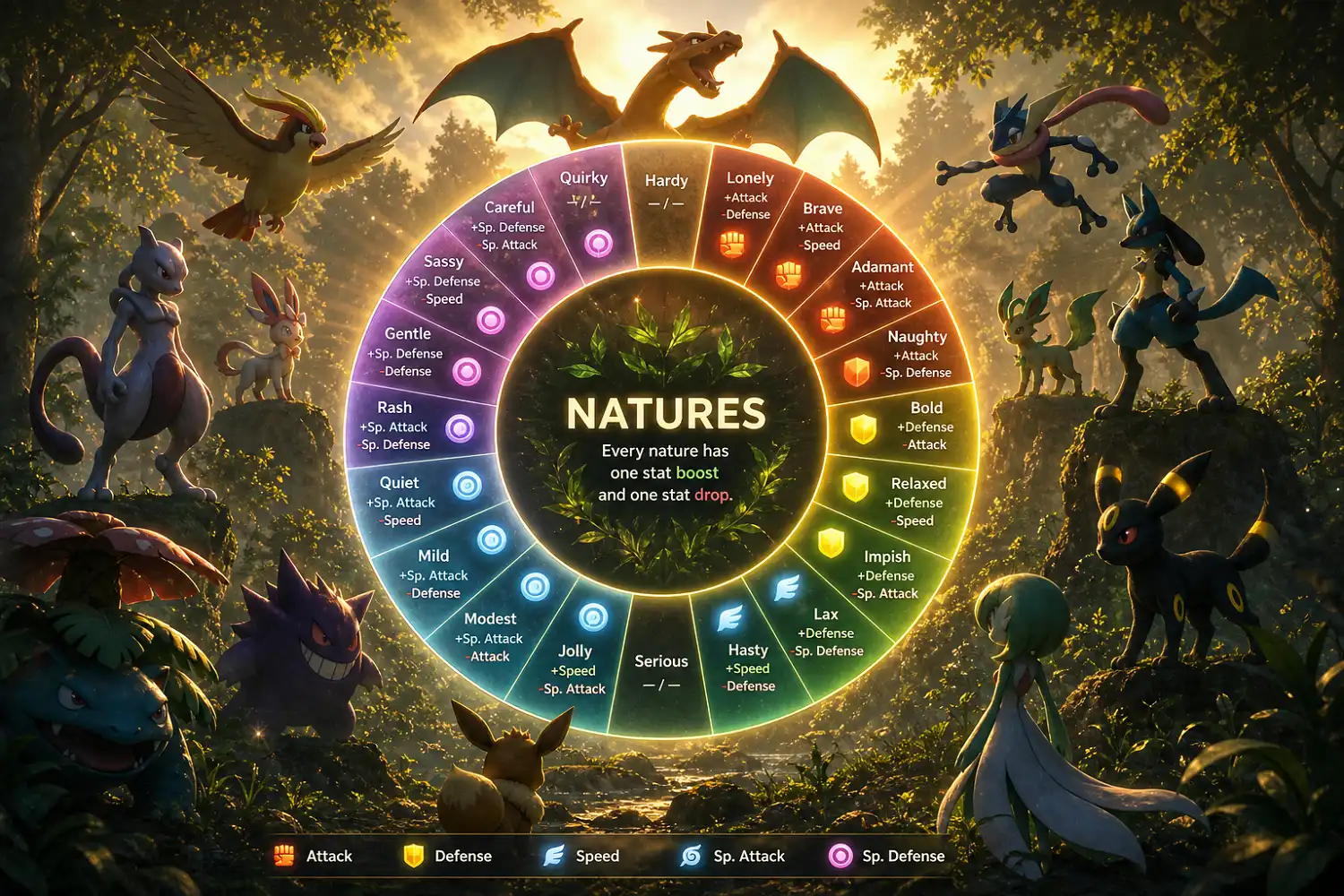
Nature Pokémon refers to the nature system introduced in Generation III (Pokémon Ruby and Sapphire). Every Pokémon you catch, breed, or receive has one of 25 possible natures assigned to it. These natures are permanent and directly influence how your Pokémon’s stats grow as it levels up.
Think of a nature as your Pokémon’s personality — and in competitive play, personality matters.
How Natures Affect Stats
Each nature either:
- Boosts one stat by 10%
- Reduces another stat by 10%
- Or does nothing (neutral natures)
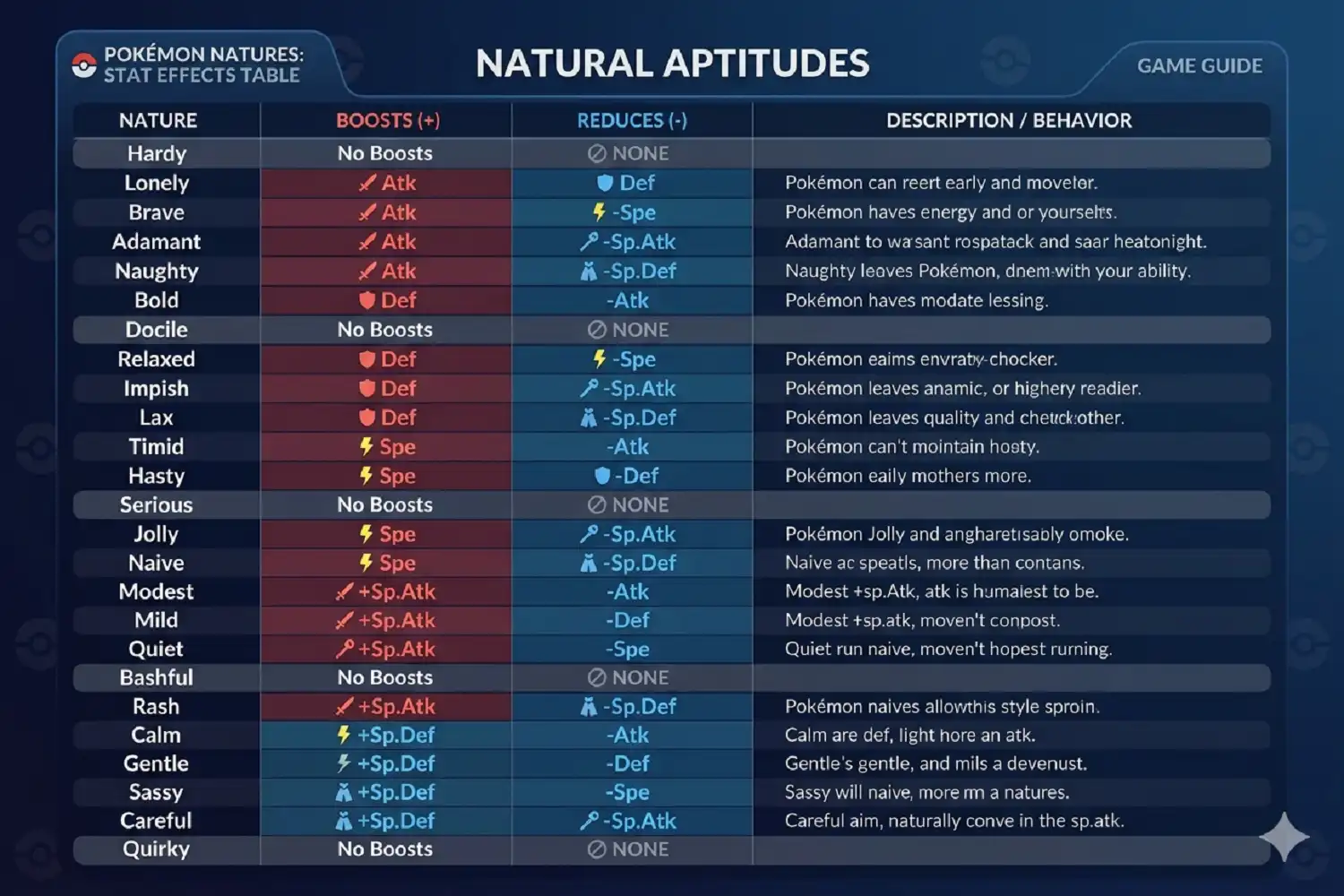
There are 5 neutral natures (Hardy, Docile, Serious, Bashful, Quirky) that have no effect on stats. The remaining 20 natures each increase one stat while decreasing another.
| Nature | Increased Stat | Decreased Stat |
|---|---|---|
| Adamant | Attack | Sp. Attack |
| Modest | Sp. Attack | Attack |
| Jolly | Speed | Sp. Attack |
| Timid | Speed | Attack |
| Bold | Defense | Attack |
| Calm | Sp. Defense | Attack |
| Impish | Defense | Sp. Attack |
| Careful | Sp. Defense | Sp. Attack |
| Naive | Speed | Sp. Defense |
| Hasty | Speed | Defense |
📌 For the full breakdown of every single nature and its stat effects, check out this nature chart Pokémon complete guide.
Why Nature Pokémon Matter in Competitive Play
In casual play, a wrong nature might cost you a few battles. In competitive play, it can cost you entire tournaments. Here’s why nature Pokémon selection is so critical:
1. Every Stat Point Counts
At level 100, a 10% boost or penalty on a key stat translates to real numerical differences sometimes 20–30 stat points. That gap can mean the difference between outspeeding an opponent or surviving a hit.
2. Natures Define Roles
A nature essentially helps define your Pokémon’s role on a team:
- Physical sweeper? → Go Adamant or Jolly
- Special attacker? → Go Modest or Timid
- Defensive wall? → Go Bold, Calm, or Careful
- Mixed tank? → Consider Impish or Careful
3. Bad Natures Sabotage Your Pokémon
A Timid Machamp? A Modest Garchomp? These natures actively reduce the stats those Pokémon rely on most. Understanding which stats to boost — and which to protect — is the foundation of smart nature Pokémon selection.
The Best Natures in Pokémon — Top Picks for Every Role
Not all natures are created equal. Some are nearly universally useful, while others are highly situational.
Best Natures for Physical Attackers
Adamant is the go-to choice when you don’t need extra speed. It gives a clean +10% to Attack, making your physical moves hit harder. Use it on Pokémon like Dragonite, Tyranitar, and Scizor.
Jolly is ideal when Speed is the priority. Many physical sweepers need to outrun their threats, and Jolly gives that speed edge without sacrificing Attack entirely.
Want a deeper dive into Jolly nature specifically? Read our Jolly nature guide: what it does and when to use it.

Best Natures for Special Attackers
Modest boosts Special Attack, making it perfect for Pokémon like Alakazam, Vaporeon, and Gengar that rely on powerful special moves.
Timid is the Speed-focused option for special attackers. If your Pokémon needs to move first, Timid ensures it does.
Learn which Pokémon excel with a Timid nature in our Timid nature Pokémon: top picks & pro tips.
Best Natures for Defensive Pokémon
Bold boosts Defense while dropping Attack — ideal for physical walls who never use physical moves anyway.
Calm raises Special Defense and is perfect for special walls and support Pokémon.
Impish is a solid middle-ground defensive nature for Pokémon that need to tank physical hits without giving up anything important.
Curious about Impish nature? Our Impish nature Pokémon guide covers top picks and proven strategies.
How to Get the Nature You Want
Finding the right nature Pokémon used to be a matter of luck. Today, there are several reliable methods.
1: Breeding with Everstone
Equip a parent Pokémon with an Everstone, and the offspring has a 50% chance of inheriting that parent’s nature. Breed repeatedly until you get the nature you need.
2: Synchronize in the Wild
Lead your party with a Pokémon that has the Synchronize ability holding the desired nature. Wild Pokémon have a 50% chance of sharing that nature when you encounter them.
3: Mints (Generation VIII onward)
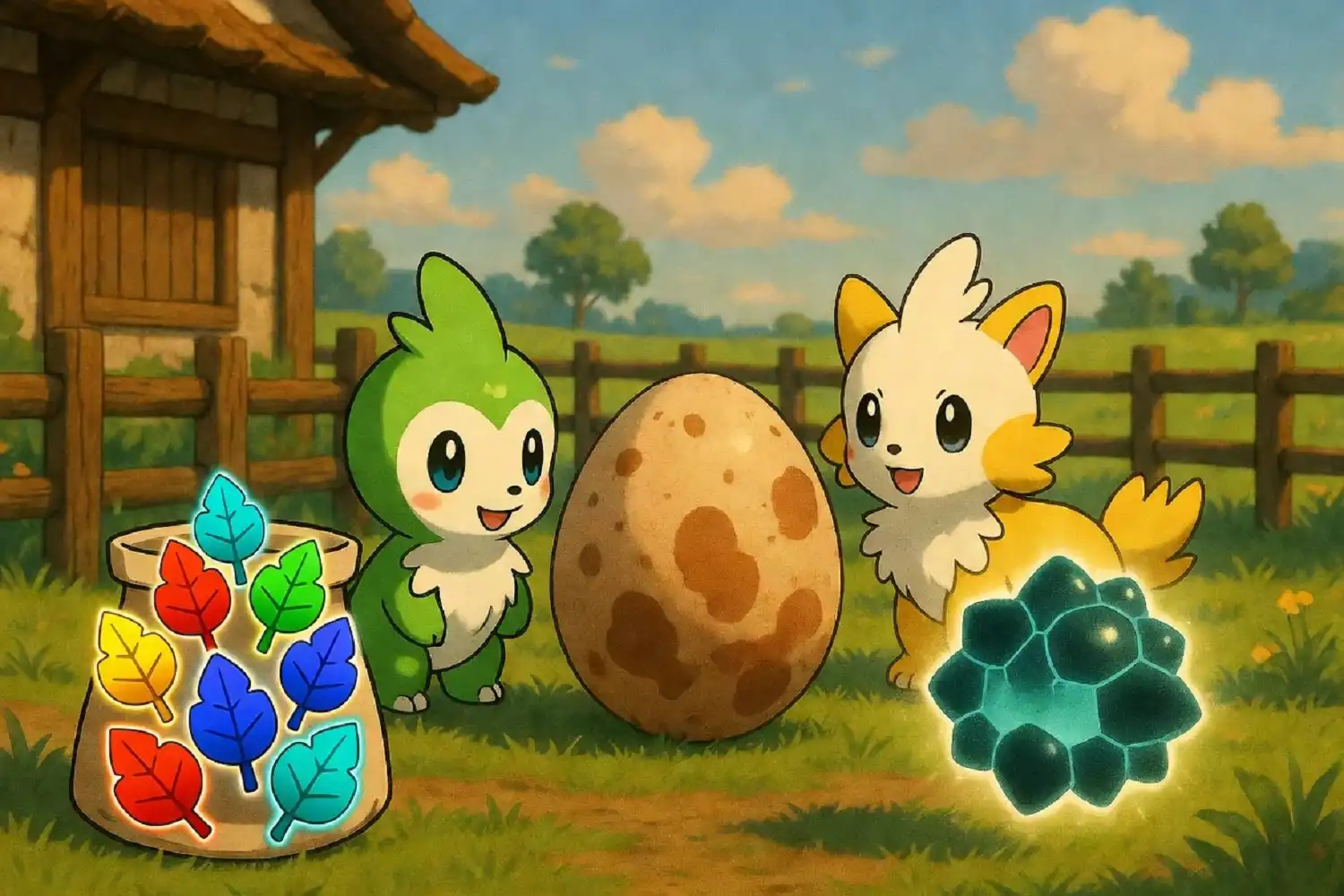
Introduced in Pokémon Sword and Shield, Mints are items that change the stat effect of a Pokémon’s nature without changing the nature itself. You can buy Mints at the Battle Tower using BP.
- Jolly Mint → makes a Pokémon’s stats act as if it has a Jolly nature
- Adamant Mint → mirrors Adamant nature stat behavior
This is a game-changer for competitive players who can’t breed endlessly.
4: Catching Raid Pokémon
In Generation VIII and IX, Tera Raid Pokémon sometimes come with predetermined natures. Keep an eye on special event raids.
Nature Pokémon Tips for Beginners
If you’re new to the nature system, here are some quick tips to get started:
- Check the summary screen. A nature displayed in red boosts a stat; in blue, it reduces one.
- Prioritize your main role. Focus on the stat your Pokémon uses most.
- Don’t stress neutral natures for in-game. For the main story, neutral natures are completely fine.
- Learn the 5 neutral natures. Hardy, Docile, Serious, Bashful, and Quirky — these are your “does nothing” natures.
- Use Mints if you’re in Gen VIII+. Don’t waste hours breeding if Mints are available.
Common Nature Pokémon Mistakes to Avoid
Even experienced players slip up. Here are the most common mistakes:
1: Boosting an Unused Stat
Many Pokémon are built purely for physical or special attacks. Giving a purely physical attacker a Modest nature (which boosts Sp. Attack they’ll never use) is a wasted opportunity.
2: Ignoring Speed Tiers
Speed is king in many competitive formats. Underestimating how important a nature’s effect on Speed is can leave your Pokémon constantly moving second.
3: Using Neutral Natures Competitively
In casual play, neutral natures are fine. In competitive battles, those extra 10% stat points matter enormously. Always aim for an optimal nature in ranked play.
4: Forgetting Nature Interactions with EVs
A bad nature can’t be saved by EV training alone. Nature and EVs must work together. If your nature reduces Speed, heavy Speed EV investment still won’t overcome that penalty efficiently.
Nature Pokémon and the Broader World of Nature
Interestingly, the concept of “nature” in Pokémon mirrors how we think about nature in the real world the idea that natural traits and characteristics shape the strengths and weaknesses of living things. Just as Pokémon natures shape their stats, nature itself shapes the world around us in fascinating ways.
If you love exploring the concept of nature beyond the game, you might enjoy reading about why things in nature merely grow a thought-provoking look at how natural growth mirrors game design philosophies in surprising ways.
For those interested in the external science of Pokémon nature mechanics, Bulbapedia’s nature page offers one of the most comprehensive reference databases available for Pokémon nature data.
Additionally, the official Pokémon website regularly updates with competitive tips and game news that can inform your nature selection strategies.
Quick Reference — Nature Pokémon Stat Chart
| Role | Best Nature | Stat Boosted | Stat Lowered |
|---|---|---|---|
| Physical Sweeper | Adamant | Attack | Sp. Atk |
| Fast Physical | Jolly | Speed | Sp. Atk |
| Special Sweeper | Modest | Sp. Atk | Attack |
| Fast Special | Timid | Speed | Attack |
| Physical Wall | Bold | Defense | Attack |
| Special Wall | Calm | Sp. Def | Attack |
| Mixed Defense | Impish | Defense | Sp. Atk |
| Sp. Def Tank | Careful | Sp. Def | Sp. Atk |
| Speed Focus | Naive | Speed | Sp. Def |
| Balanced Speed | Hasty | Speed | Defense |
For the full 25-nature chart with every combination, visit our detailed nature chart Pokémon guide.
FAQs
What is a nature in Pokémon?
A nature in Pokémon is a permanent characteristic assigned to every Pokémon that affects its stat growth. There are 25 natures 5 neutral (no effect) and 20 that each boost one stat by 10% while lowering another by 10%. Understanding nature Pokémon mechanics is essential for competitive play.
Which nature Pokémon is the best overall?
There’s no single “best” nature it depends entirely on your Pokémon’s role. Adamant and Jolly are top picks for physical attackers. Modest and Timid dominate for special attackers. Bold, Calm, and Impish are preferred for defensive builds. The right nature Pokémon choice is always role-specific.
Can you change a Pokémon’s nature after catching it?
You can’t change the nature itself, but from Generation VIII onward, Mints allow you to change the stat effect of a nature. This means your Pokémon behaves as if it has a different nature without actually changing its listed nature. This makes optimizing nature Pokémon much more accessible.
Do natures affect all stats?
No. Natures only affect five stats: Attack, Defense, Speed, Special Attack, and Special Defense. They do not affect HP. This is why HP is typically maxed through EVs regardless of nature.
What are neutral natures in Pokémon?
Neutral natures Hardy, Docile, Serious, Bashful, and Quirky don’t boost or reduce any stat. They’re completely fine for casual playthroughs but generally avoided in competitive play where every percentage point matters in nature Pokémon optimization.
How do I know if my Pokémon has a good nature?
Open the Pokémon’s summary screen. A stat shown in red is boosted by the nature; a stat shown in blue is reduced. If the boosted stat is one your Pokémon relies on (like Attack for a physical sweeper), you have a great nature Pokémon. If the reduced stat is critical, consider using a Mint.

Conclusion
Mastering the nature Pokémon system is one of the most impactful things you can do to improve your game. From understanding how natures boost and reduce stats, to using Mints and Synchronize to control which natures you get every competitive trainer needs this knowledge in their toolkit.
Here’s a quick recap of what we covered:
- Nature Pokémon are defined by 25 natures, each with unique stat effects
- 20 natures boost one stat by 10% and lower another by 10%
- Top picks include Adamant, Jolly, Modest, Timid, Bold, Calm, and Impish
- You can influence natures through breeding (Everstone), Synchronize, and Mints
- Always match your nature to your Pokémon’s primary role
Start by auditing your team’s natures today — you might be surprised how many battles a better nature could have won. Share this guide with a fellow trainer, and explore our full collection of Pokémon nature guides to keep leveling up your strategy!