Graduation Congratulations Messages: What to Write and Why It Matters
Graduation congratulations messages mark one of the clearest finish lines a person crosses in life. The right words tell a graduate that their work was seen and that it mattered. This guide covers exactly what to write, how to personalize it, and where common mistakes happen.
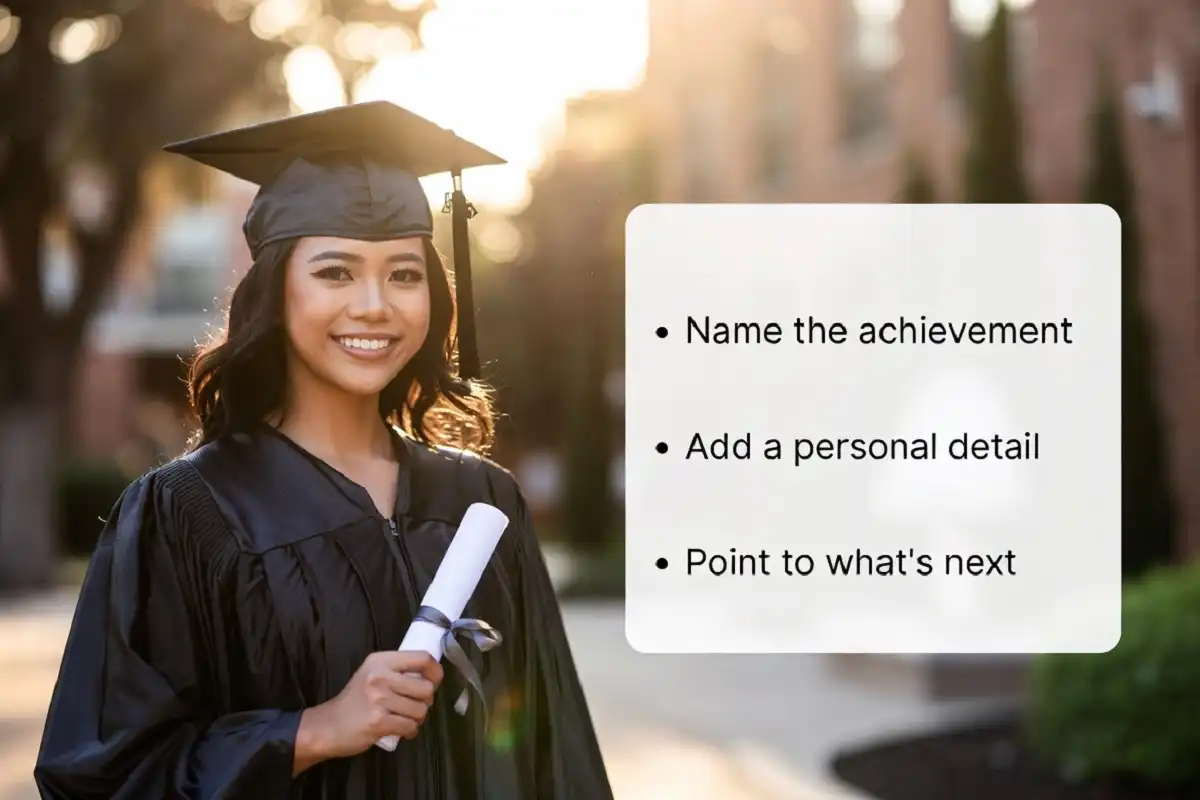
A strong graduation congratulations message names the specific achievement, adds one detail only you would know, and points toward what comes next. Keep it to two or three sentences. Specificity beats length every time.
Why Graduation Congratulations Messages Matter So Much
A graduation congratulations message matters because it validates years of effort in a single moment. Graduates remember who reached out and what those people said. I’ve watched graduates read through a stack of cards at a family party, and the ones that get read twice are never the generic ones. They’re the ones that mention a specific class, a specific struggle, or a specific joke only that person would know.
Graduation marks a formal transition, and human cultures have marked transitions like this with ceremony and words for a long time. The tradition traces back to the medieval origins of the academic graduation ceremony, where scholars were formally recognized for completing their studies. That history is part of why a graduation congratulations message carries more weight than a casual “nice job.”
What Makes a Graduation Congratulations Message Actually Good
A good graduation congratulations message answers a simple test: could this message have been sent to anyone, or only to this graduate? If it could apply to anyone, it needs more specificity.
Three elements separate a memorable message from a forgettable one:
- Name the exact achievement. “Congratulations on finishing your nursing degree” lands harder than “Congrats on graduating.”
- Reference something true and specific. A late-night study session you witnessed, a hard semester they pushed through, a professor they complained about for months.
- Look forward, briefly. One line about what you’re excited to see them do next.
Skip generic filler like “the sky’s the limit” or “the world is your oyster.” These phrases show up in graduation congratulations messages so often that graduates stop reading them.
How to Write Graduation Congratulations Messages for Different Relationships
For a Close Friend
Friends can be direct and a little playful. Reference an inside joke or a shared memory from the years leading up to graduation.
Example: “You did it. I watched you pull three all-nighters during finals week junior year and somehow still show up for brunch. Whatever you build next, I want a front-row seat.”
For a Family Member
Family messages carry more emotional weight. Acknowledge the years of support, not just the diploma.
Example: “Watching you walk across that stage today, after everything it took to get there, is one of the proudest moments of my life. This is just the beginning.”
For a Coworker or Employee
Professional graduation congratulations messages, such as an employee finishing a degree while working full time, should acknowledge the balancing act directly.
Example: “Finishing your degree while working full time here took real discipline. Congratulations on the degree, and thank you for showing the rest of the team what’s possible.”
The same care that goes into heartfelt work anniversary messages for every team applies here: specificity about the person’s actual contribution beats a generic template every time.
For a Student You Mentor or Teach
Teachers and mentors have a unique vantage point. Reference growth over time, not just the end result.
Example: “I remember your first paper in my class and the paper you wrote for your thesis. The difference is remarkable. Congratulations, you earned every bit of this.”
Graduation Congratulations Messages for High School vs. College
High school and college graduations call for different tones. A high school graduation congratulations message can be lighter and more encouraging about the road ahead, since most high school graduates are still figuring out their direction.
High school example: “Congratulations! High school wasn’t always easy, but you made it through with your sense of humor intact. Excited to see where you land next.”
College graduation congratulations messages can reference the specific field of study, internships, or a thesis, since college graduates have usually built real expertise by this point.
College example: “Four years, one degree, and more all-nighters than either of us can count. Congratulations on finishing your civil engineering program. Go build something incredible.”
Graduation Congratulations Messages for Cards, Texts, and Social Media
The format changes what fits.
Cards allow for the longest, most personal message. Use three to five sentences and reference a specific memory.
Texts should be short and warm, sent close to the ceremony. One or two sentences works best: “Congratulations, graduate! So proud of you today.”
Social media captions need to work for a wider audience while still feeling personal to the graduate. Tag the graduate directly and mention one true detail: “Four years of hard work, and today it paid off. So proud of this one. Congratulations, [name]!”
Common Mistakes in Graduation Congratulations Messages
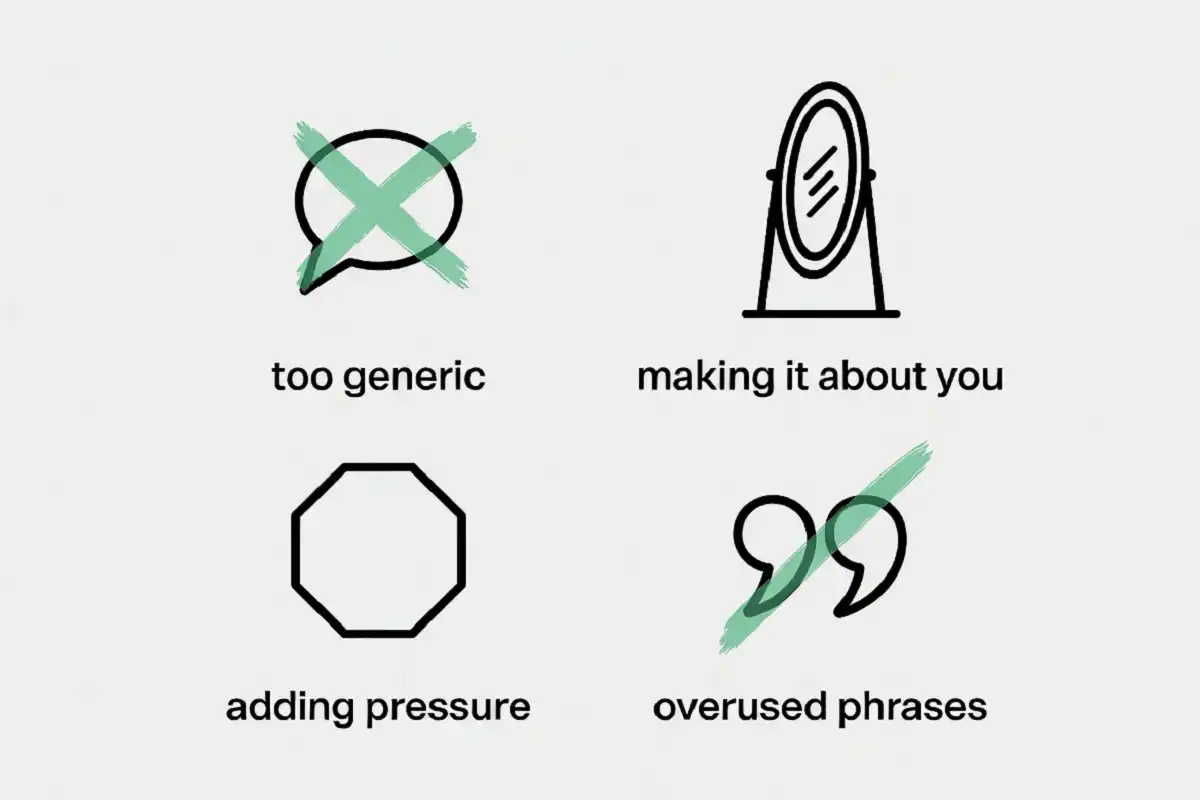
Being too generic. “Congrats!” with nothing else feels like an afterthought, even if that wasn’t the intent.
Making it about you. A graduation congratulations message should center the graduate, not a story about your own graduation.
Adding pressure about the future. Avoid lines like “Now the real work begins” or heavy questions about job plans. Graduation day isn’t the moment for that pressure.
Using outdated or overused phrases. Skip “the future is bright” and similar phrases that show up in nearly every generic card. Specificity always reads as more sincere than a polished cliché.
FAQs

How long should a graduation congratulations message be?
What should you avoid saying in a graduation congratulations message?
Can you send a graduation congratulations message after the ceremony has passed?
What I’d Tell a Friend
If you’re stuck on what to write, start with one true detail about the graduate that nobody else would think to mention. Build the rest of the graduation congratulations message around that detail. Skip the clichés, keep it short, and let the specific thing you noticed do the work. That’s what graduates actually remember.
If you’re planning something bigger than a card, pairing the right words with a small gathering makes the moment land even harder. Some of the same family celebration ideas that work for other milestones apply just as well to a graduation party.