Goal Setting Strategies for 2026: Full Guide
Goal setting strategies for 2026 work best when they turn a vague wish into a system you actually follow. This guide gives you the exact methods, backed by research and real practice, to set goals you’ll finish this year.
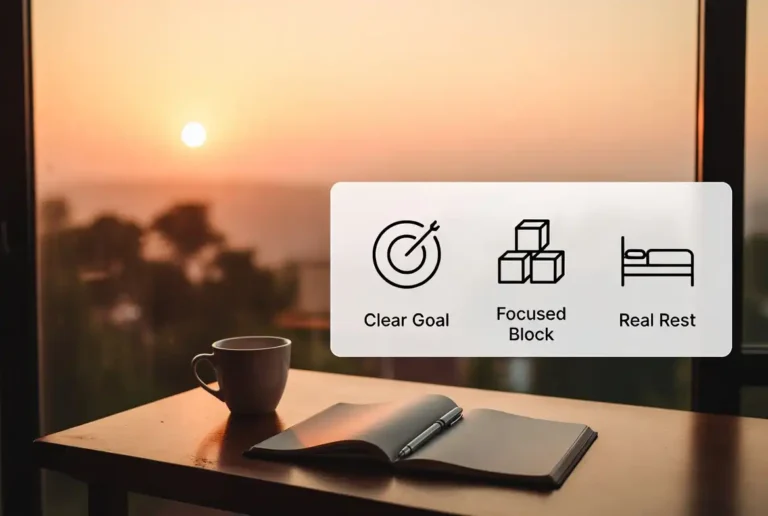
The strongest approach pairs a clear outcome with a daily process. Pick 2–3 priorities, break each into a weekly action, and track progress on paper. Small, consistent systems beat big resolutions every time.
Why Most Resolutions Fail by February
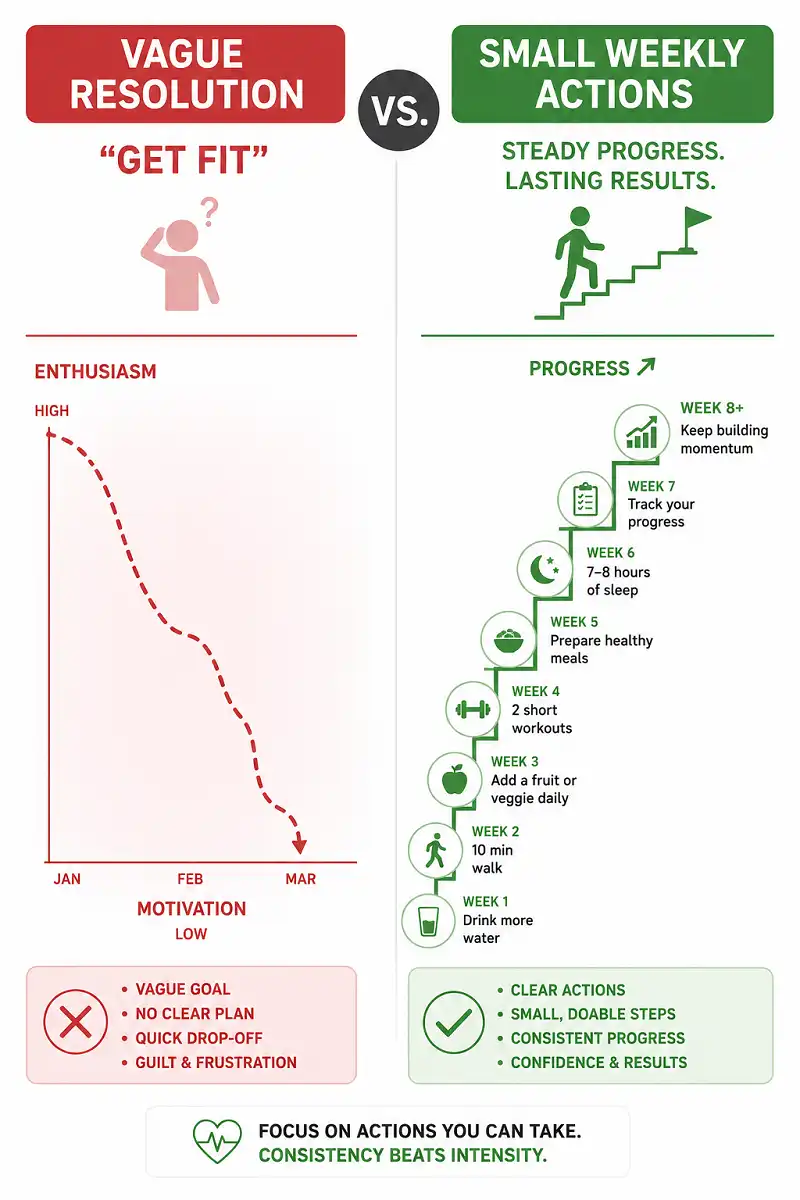
Most people quit their goals within six weeks. The problem isn’t willpower. It’s design. A goal like “get fit” has no finish line, no next step, and no way to measure a good day from a bad one. This is the first place goal setting strategies for 2026 have to improve on the old resolution model.
I’ve watched this pattern for years, both in my own habits and in friends who set the same January goal every year. The fix is structure. When you know exactly what to do today, motivation stops being the bottleneck.
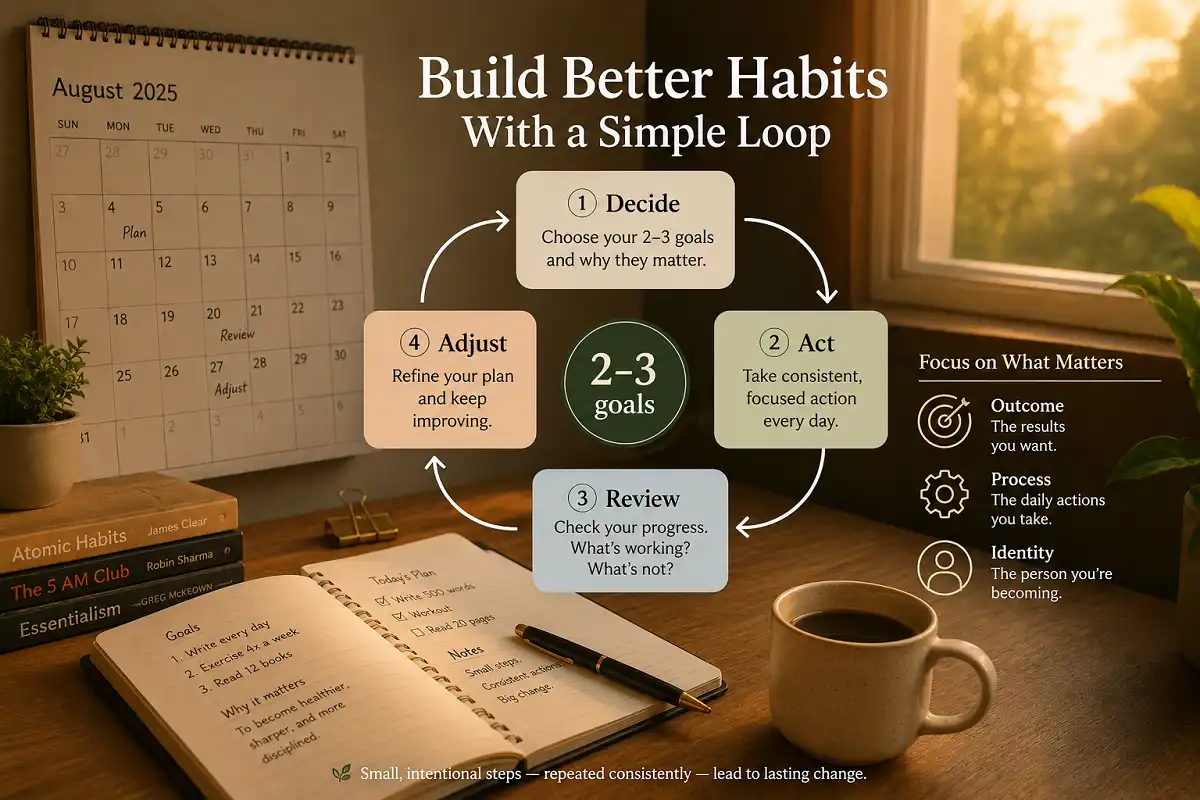
Good goal setting strategies for 2026 replace vague intentions with a repeatable loop: decide, act, review, adjust. That loop is what carries you past the point where resolutions usually collapse.
Start With Fewer Goals, Not More
Pick two or three goals. That’s it. People who chase ten priorities finish none of them.
Focus is a real constraint. Your attention and energy are limited, so spreading them across a dozen aims guarantees shallow effort everywhere. Choose the two or three outcomes that would change your year most, and let the rest wait. Nearly all workable goal setting strategies for 2026 begin with this act of subtraction.
If you’re rebuilding your drive first, a short read on simple ways to grow as a beginner pairs well with narrowing your list. Clarity about who you want to become makes goal selection far easier.
How Do You Choose the Right Two or Three?
Rank every goal by impact and readiness. Ask which outcome improves your life most, and which one you’re actually prepared to start now. The goals that score high on both go to the top.
Write each finalist as a single sentence. If you can’t state it plainly, it isn’t clear enough to pursue yet.
Core Goal Setting Strategies for 2026: Outcome, Process, Identity
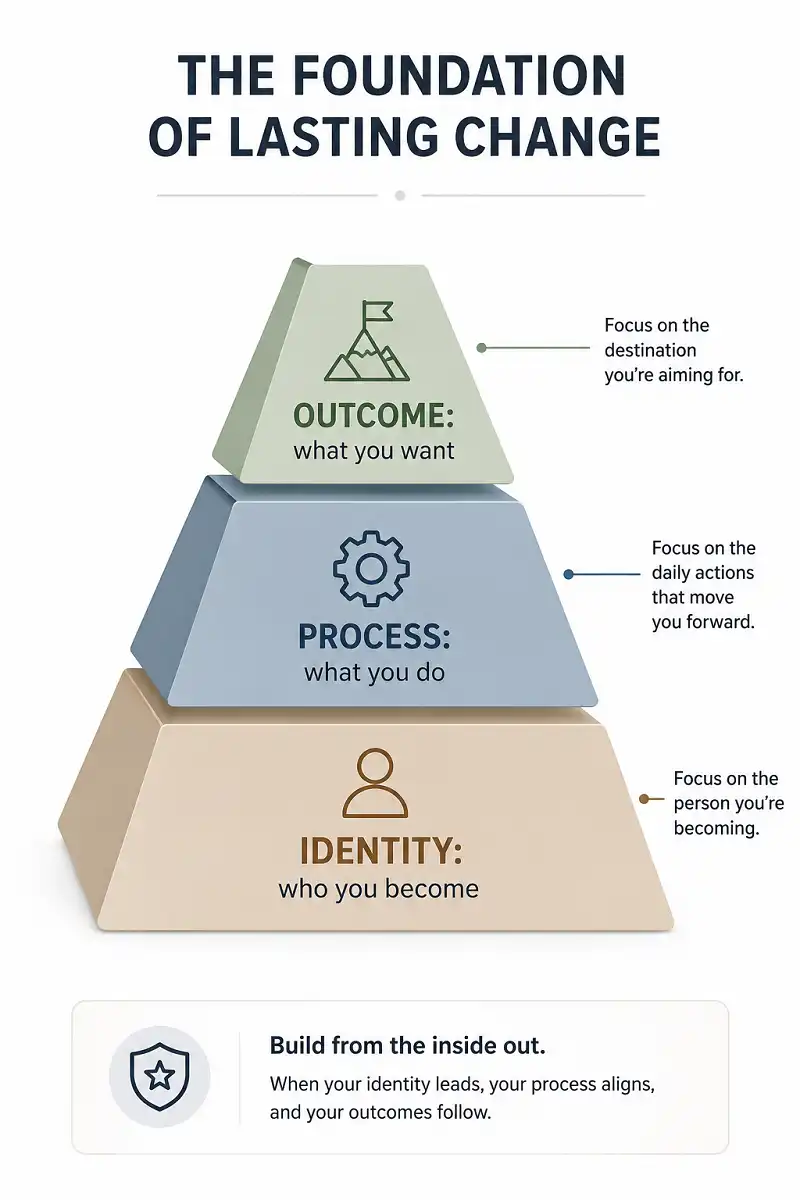
Every strong goal has three layers. The outcome is what you want. The process is what you do. The identity is who you become. Miss any layer and the goal wobbles.
Outcome goals set direction. “Run a half marathon in October” tells you where you’re headed. But an outcome alone gives you no instructions for a random Tuesday.
Process goals fill that gap. “Run three times a week” is something you control completely. You can’t force a race result, but you can always show up for the run. This is the heart of practical goal setting strategies for 2026: measure the actions, not just the finish.
Identity goals make it stick, and they anchor the deepest work you’ll do. When you start seeing yourself as “a runner” rather than someone trying to run, the behavior stops feeling like a chore. Actions that match your self-image need far less willpower to repeat.
Make Each Goal Measurable
A goal you can’t measure is a goal you can’t manage. Attach a number and a date to every outcome. “Save money” becomes “save $6,000 by December 31.” Now every month has a target.
For process goals, count the reps. Sessions per week, pages per day, calls per morning. Countable actions give you honest feedback without guesswork, which is why measurement sits at the center of good goal setting strategies for 2026.
Break Big Goals Into Weekly Actions
Annual goals feel abstract in January. Weekly actions feel real. Slice each yearly outcome into a task small enough to finish this week.
Take a savings goal of $6,000. That’s $500 a month, or roughly $115 a week. Suddenly the number isn’t intimidating, it’s a line item you can plan around. This is where most goal setting strategies for 2026 either take hold or fall apart, at the point where the big number meets the weekly calendar.
Do the same for any goal. A book manuscript becomes 1,000 words on set days. A fitness target becomes three scheduled workouts. The year takes care of itself when the weeks are handled.
Goal Setting Strategies for 2026 That Stick
Set one time each week to check your actions against your plan. Fifteen minutes is enough. Ask three questions: What did I finish? What slipped? What’s the plan for next week?
This review is the adjustment step that keeps goals alive. Without it, small slips compound silently until the goal quietly dies. Athletes and writers I know all run some version of this weekly check, and it’s one of the most reliable review habits you can adopt.
Design Your Environment, Not Just Your Willpower
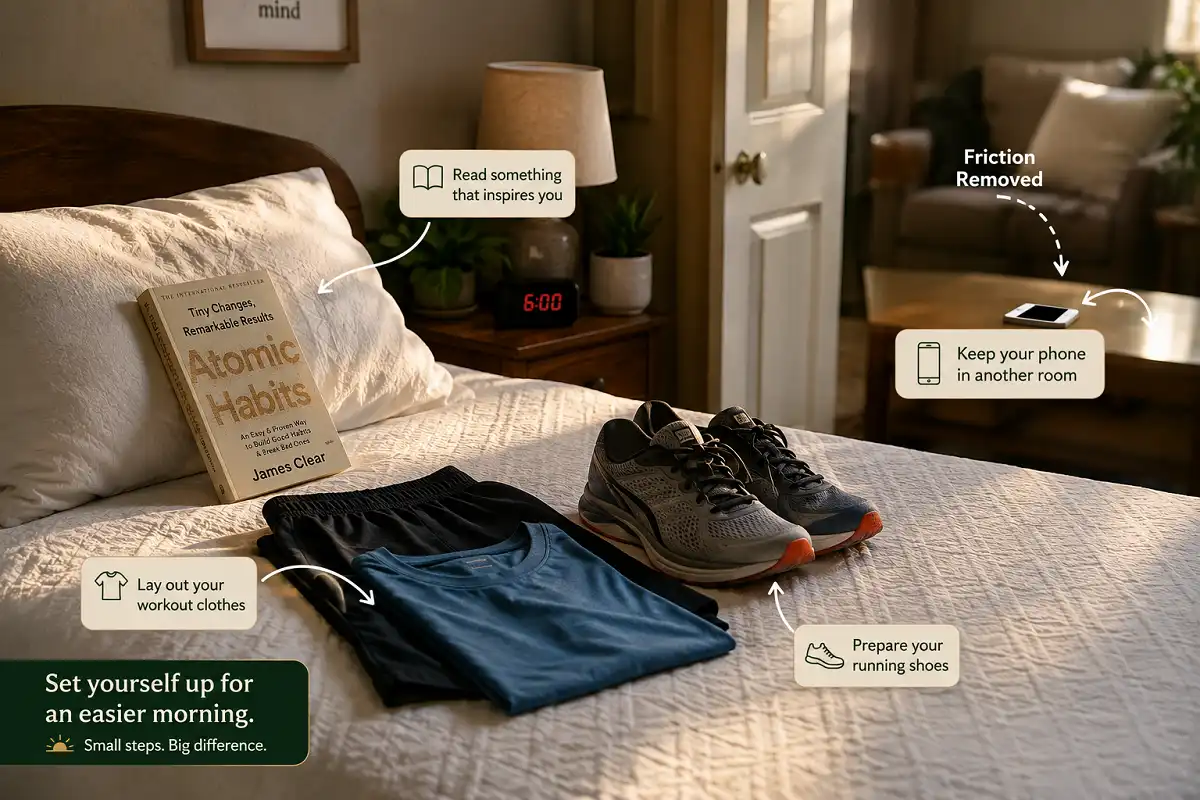
Your surroundings decide more of your behavior than your intentions do. Make the good action easy and the bad one slightly harder.
Want to read more? Put the book on your pillow and the phone in another room. Want to run at dawn? Lay your shoes and clothes out the night before. I set my gear by the door before a sunrise shoot for the same reason, because friction at 5 a.m. is what kills good plans.
Removing three seconds of friction from a habit sounds trivial. It isn’t. Those small design choices are quietly among the most effective goal setting strategies for 2026 because they work even on low-motivation days.
Stack New Habits Onto Old Ones
Attach a new action to something you already do daily. “After I pour my morning coffee, I write for twenty minutes.” The existing habit becomes the trigger.
This removes the hardest part, remembering to start. Your established routine does the reminding for you, so the new behavior slots in without extra mental effort. Habit stacking is one of the simplest goal setting strategies for 2026 to apply today.
Track Progress Where You Can See It
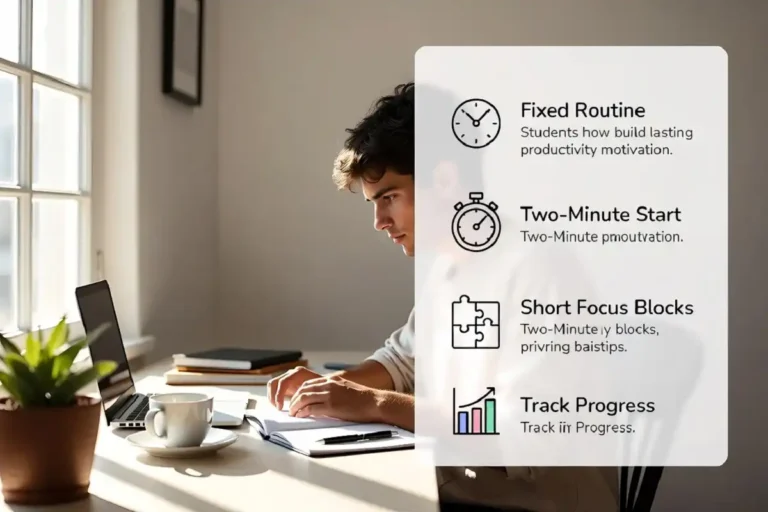
Visible progress is fuel. A habit you can watch build makes you want to keep the streak going. Use a paper tracker, a wall calendar, or a simple checklist.
Mark each completed action. The growing chain of marks creates its own motivation, and the visible gap of a missed day nudges you back without any lecture. Keep the tracker somewhere you pass every day.
Progress tracking is one of the goal setting strategies for 2026 that costs nothing and pays off immediately. The act of recording keeps you honest, and the record itself keeps you moving.
Never Miss Twice
Missing one day is an accident. Missing two starts a new pattern. The rule is simple: if you skip today, you show up tomorrow no matter what.
This single guideline protects you from the all-or-nothing trap that ends most goals. One bad day never has to become a bad week. Building resilient routines is easier when you treat slips as data, not failure, a mindset that ties closely to daily habits that compound over time.
Plan for Obstacles Before They Arrive
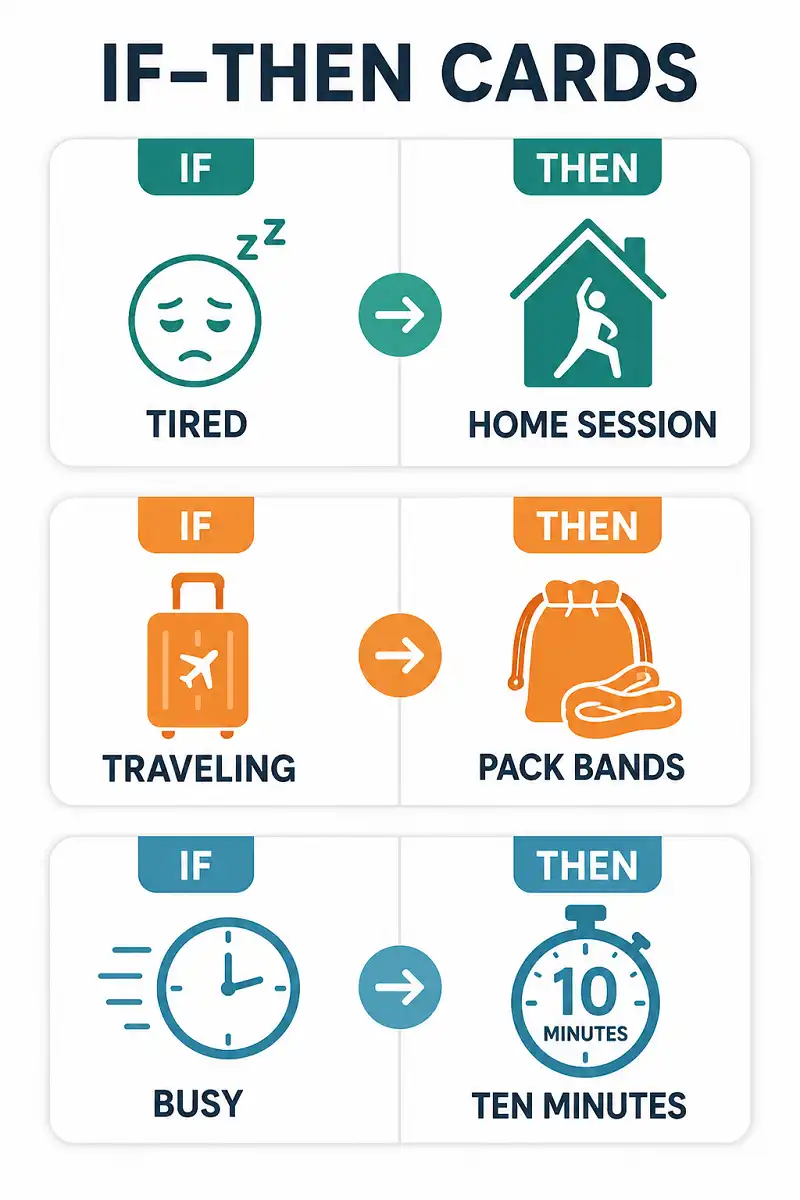
Every goal meets resistance. Decide in advance how you’ll respond. This is called an if-then plan, and it beats hoping you’ll figure it out later.
Write the format plainly: “If I’m too tired to run outside, then I’ll do a ten-minute session at home.” “If a work trip breaks my routine, then I’ll pack my resistance bands.” You’ve already made the decision, so the obstacle loses its power to derail you.
Named obstacles are manageable obstacles. Strong goal setting strategies for 2026 assume disruption instead of pretending the year will run smoothly. It won’t, and planning for that is what separates finishers from restarters.
Build in a Reset Plan
Decide now what happens after a bad week. Not if, but when. Your reset plan might be “return to the minimum version of the habit” or “cut the goal back to one action until I’m steady again.”
A reset isn’t quitting. It’s the recovery step that keeps a rough patch from ending the whole effort. The people who reach December are simply the ones who reset the most times.
Match Your Goals to the Right Motivation
Two kinds of motivation drive goals. Intrinsic motivation comes from within, like the satisfaction of a skill improving. Extrinsic motivation comes from outside, like a reward or deadline. Use both, but lean on the first.
Goals tied to internal reasons last longer. “I want to feel strong and capable” outlasts “I want to look good for one event.” When the external prize disappears, the internal reason keeps you going.
Some of the most durable goal setting strategies for 2026 work because they connect a daily action to a personal reason you actually care about. Find that reason for each goal and write it next to the target.
Use Accountability Wisely
Tell one person who will genuinely check on you. A specific, caring witness raises your follow-through more than a public announcement to strangers.
Pick someone who’ll ask real questions, not just cheer, since accountability sharpens most goal setting strategies for 2026. A weekly text with a training partner, or a shared tracker with a friend, turns a private goal into a small commitment you’re less likely to skip. A few well-chosen words that push you to keep going can help on the hard mornings too.
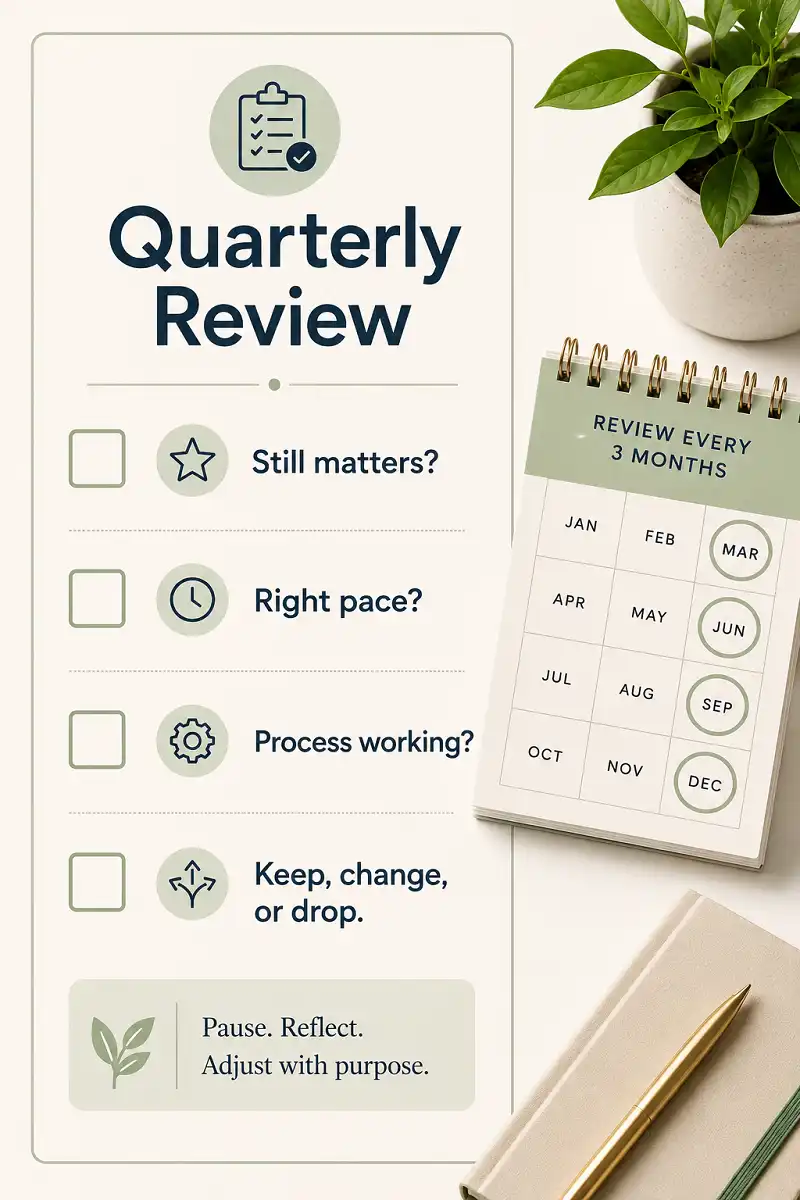
Review and Adjust Every Quarter
Goals set in January shouldn’t be frozen. Life shifts, and your goals should shift with it. Every three months, run a deeper review than your weekly check.
Ask whether each goal still matters, whether the pace is right, and whether the process is working. Keep what’s working. Change what isn’t. Drop what no longer fits. Honest quarterly reviews are among the most overlooked goal setting strategies for 2026, and they prevent you from grinding toward a target that stopped mattering months ago.
This flexibility isn’t a lack of commitment. It’s the sign of a system that responds to reality instead of ignoring it.
Celebrate Real Milestones
Mark meaningful progress along the way. Hitting the halfway point of a savings goal or finishing a training block deserves a small, honest acknowledgment. Recognition reinforces the behavior that got you there, closing the loop on the goal setting strategies for 2026 you’ve built.
Keep the celebration proportional. A milestone reward that undoes the goal makes no sense, so pick something that fits the effort and moves you forward.
Common Mistakes to Avoid
A few errors sink goals fast. Setting too many at once splits your focus. Making them vague removes your instructions. Skipping the tracking hides your progress until it’s gone.
Another trap is chasing motivation instead of building systems. Motivation comes and goes. A system runs on the days you don’t feel inspired, which is exactly when it matters. Durable goal setting strategies for 2026 are built for those days, not the easy ones.
Perfectionism is the quiet killer. People abandon a goal after one imperfect week because the streak “broke.” Progress isn’t a clean line, and treating every slip as failure guarantees you’ll quit something that was actually working.
Tools That Actually Help
You don’t need much. A paper notebook, a wall calendar, and a pen cover the essentials for most people. Simple tools you’ll actually use beat complex apps you abandon.
If you prefer digital, a basic habit-tracking app or a plain spreadsheet works. A dedicated planner or a quality bullet journal can be worth it if physical writing keeps you consistent, since the right notebook you enjoy opening is a small investment that pays back in follow-through. Choose the format you’ll return to daily, then stop shopping for tools and start using one.
What I’d Tell a Friend
Keep it small and keep it visible. Pick two or three goals, break each into a weekly action, and track it somewhere you’ll see every day. When you slip, reset instead of quitting.
The goal setting strategies for 2026 that actually work aren’t complicated. They’re a clear outcome, a controllable process, and a system you review often enough to keep it alive. Build that loop once, and this becomes the year the resolutions finally stick.
For visual planners and printable trackers to keep your goals in front of you, browse the goal-setting boards on Pinterest for calendar layouts and habit-tracker templates you can adapt to your own year.