Motivational Quotes That Help You Take Action
A good line at the right moment can shift how you feel about a hard day. That is the quiet power behind motivational quotes. They are short, easy to remember, and they show up when you need a small push. Still, not every quote helps, and not every quote is even real. This guide looks at why these short sayings work, when they do not, and how to pick ones that fit your life. The goal is simple: words that move you toward action, not just a nice feeling.
What Makes Motivational Quotes Work
Motivational quotes work because they put a clear idea into a few words. When you are tired or stuck, a long pep talk can feel like too much. A single sentence is easier to take in, and it can stay with you for hours. The best lines name something you already believe but had not put into words yet. Good motivational quotes do this in a way you can feel, which is why one short sentence can stick when a whole article slips away.
The Science of Positive Words
There is real research behind the idea that positive, self-focused statements can help. The practice is close to what psychologists call self-affirmation, a field that grew from the work of Claude Steele in the late 1980s. Brain imaging studies have found that affirming your own values can activate reward-related areas of the brain tied to how we process value and self-worth. In one well-known experiment, people who wrote short self-affirmations before reading health advice were more likely to act on it, such as exercising more in the days that followed. You can read one overview of the research for more detail. A short quote is not the same as a personal affirmation, but it can work in a similar way when the words feel true to you.
When Quotes Fall Flat
Quotes do not help everyone in the same way. Research on positive self-talk has found that people with very low self-esteem can sometimes feel worse after repeating upbeat lines that feel out of reach. If a quote sounds fake to you, your mind tends to push back. The fix is not to force it. Pick words you can accept right now, even if they are calm and plain rather than grand. Quotes also do little on their own. They point you somewhere, but you still have to take the step.
How to Choose Motivational Quotes That Fit You

The right quote depends on what you need that day. A line about patience helps on a slow week. A line about courage helps before a hard talk. Here are a few simple ways to choose motivational quotes well:
- Match the goal. Pick a line that speaks to the thing in front of you, like focus, calm, or starting something new.
- Keep it short. A line you can repeat from memory will help more than a long passage you have to look up.
- Make it believable. Choose words you can accept today, not a promise that feels far away.
- Notice how it lands. If a line gives you a small lift or a clear next step, keep it. If it does nothing, let it go.
Check the Source Before You Share
Many of the most shared motivational quotes are not from the people we credit. This matters if you care about getting facts right, especially when you post them online. A few well-known examples show how often this happens:
- The line “be the change you wish to see in the world” is tied to Mahatma Gandhi nearly everywhere, yet there is no solid record of him saying it that way. The closest match traces to a schoolteacher writing in the 1970s.
- “It always seems impossible until it is done” is often credited to Nelson Mandela, but his own foundation has no record of him saying it.
- The popular line about people remembering how you made them feel is usually given to Maya Angelou, though the earliest version is credited to a writer named Carl W. Buehner in 1971.
None of this makes the words less useful. It just means a quick check helps before you attach a famous name. Quote research projects, such as this one, track where sayings really come from.
Simple Ways to Use Motivational Quotes Every Day
Reading a good quote is easy. Putting it to use takes a small plan. These habits make motivational quotes part of your day instead of a passing scroll:
- Start the morning with one. Read a single line before you check your phone, then carry it into your first task.
- Set it as a background. Pair a short line with a calm photo, like these scenic photo backgrounds, so you see it often.
- Write it down. A sticky note on your mirror or laptop keeps the words in view.
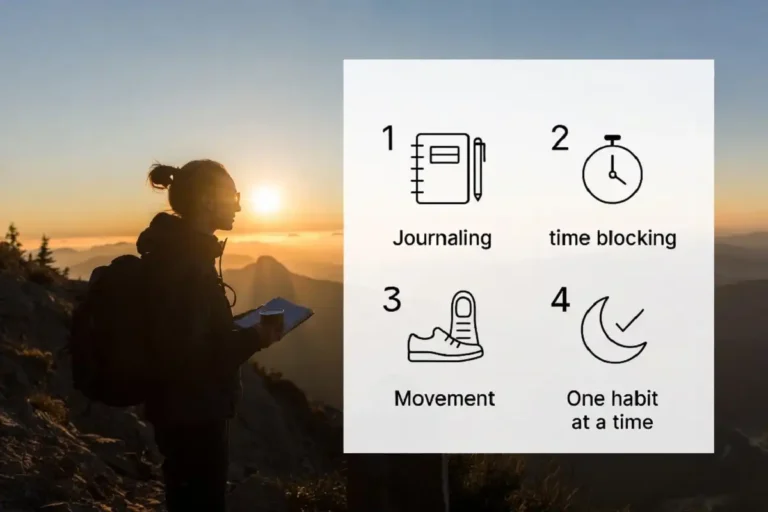
- Use it in a journal. Write a line at the top of the page, then add one thing you will do about it.
- Share it with care. Send a line to a friend who needs it, with the right name attached.

Build a Short List You Trust
Over time, it helps to keep a small set of motivational quotes that work for you. Five to ten lines is plenty. When a tough moment comes, you do not want to search; you want to reach for words you already trust. Keep them in a note on your phone or a card in your wallet. Review the list now and then, drop the lines that have gone stale, and add new ones that fit where you are now. A short, personal list beats a giant file you never open.
A Few Words Worth Remembering
Some lines earn their place because the source and the meaning both hold up. In his 2005 Stanford address, Steve Jobs told graduates that the only way to do great work is to love what you do. It lands because it came from a real moment and a real life. The best motivational quotes share that quality, where the words and the story behind them both ring true.
Real stories can move you as much as any saying. The return of an actor to a role he helped make famous, like this Broadway comeback, shows the same spirit that good lines point to: keep going, and come back to what you love.
FAQs

Do motivational quotes really work?
How many motivational quotes should I read a day?
Are most famous quotes correctly attributed?
Can motivational quotes ever backfire?
Where can I find good motivational quotes?
Should I believe quotes I see on social media?
Final Thoughts
Motivational quotes are small tools, and like any tool, they help most when you use them well. A short, honest line can steady you on a hard day, sharpen your focus, or remind you why you started. The science behind positive words is real, but the words still need you to act. So pick lines that feel true, keep them short, and check the source before you pass them on. Read one in the morning, write it where you will see it, and let it lead to a single step. Over time, those small steps add up. For more reading in the same spirit, you can explore more uplifting pieces and find the lines that fit your own path.