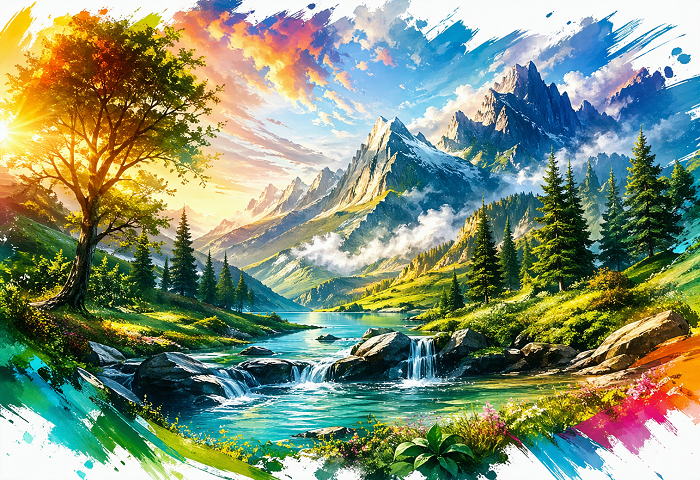
Nature Art: Explore 40 Creative Ideas & Techniques
Introduction
There is something deeply human about turning a fallen leaf, a sun-bleached stone, or a gnarled piece of driftwood into something beautiful. Nature art — the practice of creating artwork using natural materials, organic forms, and the living landscape as both medium and inspiration — sits at the intersection of creativity, ecology, and wonder. Whether you are an experienced fine artist, a curious beginner, or a parent looking for enriching weekend activities, nature art offers an endlessly renewable source of creative fuel.
In recent years, interest in nature art has surged dramatically. Google searches for nature-inspired creative work, botanical illustration, land art, and eco-art have all climbed steadily as people seek more grounded, meaningful ways to engage with the world around them. This comprehensive guide covers everything you need to know — from ancient roots to modern digital expressions, from backyard projects for children to large-scale environmental installations that reshape entire landscapes.
By the end of this article, you will have a thorough understanding of what nature art is, why it matters, and how to dive into it yourself with confidence and skill. Let us begin.
1. What Is Nature Art? A Complete Overview
At its most fundamental level, nature art is any creative work that draws upon the natural world — either by using natural materials as its medium, depicting natural subjects in its imagery, or situating artistic expression within natural environments. The term is broad by design. It encompasses a painter who captures autumn forests in oil paint, a sculptor who builds towering cairns on a riverbank, a child who arranges petals into a mandala on the grass, and a photographer who documents the geometry of a spider’s web at dawn.
What unifies these diverse practices is a fundamental orientation toward the organic world — a recognition that nature is not merely a backdrop for human activity but an active, dynamic collaborator in the creative process. In nature art, the material is never inert. A piece of bark brings its own texture, grain, and history. A cluster of pebbles carries the memory of water. Leaves arrive with their own palette of color, shaped by season, light, and soil chemistry.
Organic Medium
Uses leaves, stones, bark, flowers, soil, and other natural elements as primary materials.
Environmental Context
Often created in, inspired by, or returned to the natural landscape itself.
Artistic Expression
Ranges from fine art and illustration to folk craft, children’s play, and conceptual installation.
Eco Consciousness
Often carries an ecological message, celebrating and protecting the natural world.
It is also worth distinguishing nature art from nature-inspired design, though the two overlap. Design applies natural aesthetics to functional objects — think of wallpaper with botanical prints or furniture shaped like tree trunks. Nature art, by contrast, is primarily expressive and experiential. Its purpose is to evoke feeling, provoke thought, and forge connection rather than to serve a utilitarian function.
2. The Rich History of Nature Art Through the Ages
The story of nature art is as old as humanity itself. The earliest evidence of artistic expression — cave paintings dating back more than 40,000 years in sites such as Lascaux in France and Altamira in Spain — depicts animals, landscapes, and natural phenomena with remarkable sensitivity and skill. These ancient images were not merely decorative; they represented a profound engagement with the living world, possibly serving ritual, communicative, or spiritual purposes.
In East Asian traditions, particularly in China and Japan, the relationship between art and nature has always been especially intimate. Chinese landscape painting, or shanshui (literally “mountain-water”), developed into one of the world’s great artistic traditions over more than a millennium. These paintings do not merely copy nature — they attempt to capture its qi, its vital energy and spirit. Japanese ikebana flower arranging similarly treats the arrangement of natural materials as a meditative practice connecting the arranger to seasonal cycles and natural harmony.
In the Western tradition, the Romantic movement of the late 18th and early 19th centuries elevated nature art to new philosophical heights. Artists like Caspar David Friedrich, J.M.W. Turner, and John Constable painted landscapes not just as scenery but as expressions of the sublime — that mixture of awe, terror, and transcendence that nature uniquely provokes. The Hudson River School in America followed suit, celebrating the vast wilderness of the American continent as spiritually significant.
The 20th century brought radical new approaches to nature art. The Land Art movement, emerging in the late 1960s and 1970s, took art out of galleries entirely and placed it directly in the landscape. Artists like Robert Smithson, whose famous Spiral Jetty was constructed in Utah’s Great Salt Lake in 1970, and Andy Goldsworthy, who creates intricate temporary sculptures from leaves, ice, and stone, fundamentally redefined what nature art could be and where it could exist.
Today, nature art continues to evolve rapidly, incorporating digital tools, ecological activism, community participation, and global networks of artists who share their work online. Yet at its heart, it remains what it always has been: a conversation between human creativity and the living world.
3. Popular Types of Nature Art You Should Know
The world of nature art encompasses an enormous variety of forms and practices. Understanding the major categories can help you find the approaches that resonate most deeply with your own creative sensibility.
Botanical Illustration
One of the most refined and technically demanding forms of nature art, botanical illustration combines scientific accuracy with artistic beauty. Historically produced to document plant species for herbals and natural history publications, botanical illustration has evolved into a standalone art form valued for its extraordinary precision and delicacy. Watercolor is the most traditional medium, though contemporary botanical artists also work in graphite, pen and ink, colored pencil, and gouache.
Land Art and Environmental Sculpture
Land art — also known as earth art or earthworks — uses the landscape itself as canvas and material. Artists rearrange stones, dig channels, plant crops in patterns, or construct large-scale sculptures from found natural materials. Much land art is intentionally temporary, designed to change and eventually disappear as weather, seasons, and time do their work. This impermanence is often central to the artistic concept, echoing the cycles and transience of nature itself.
Nature Journaling and Field Sketching
Nature journaling combines writing, drawing, and observation in a personal record of encounters with the natural world. It is one of the most accessible forms of nature art, requiring nothing more than a sketchbook, a pen or pencil, and attentive eyes. Nature journaling has roots in the scientific notebooks of figures like Leonardo da Vinci and Charles Darwin and has recently experienced a major revival among artists, naturalists, and educators worldwide.
Stone Stacking and Rock Balancing
The ancient practice of building cairns and balancing stones has become a globally recognized form of meditative nature art. Artists like Michael Grab have elevated rock balancing to astonishing levels of delicacy and complexity, creating sculptures that seem to defy gravity. While stone stacking has generated some ecological controversy — particularly in sensitive natural environments where moving rocks can disturb habitats — it remains a beloved and widely practiced form of outdoor nature art.
Pressed Flower and Leaf Art
Pressing and preserving plant materials for artistic use is a centuries-old craft tradition found in cultures around the world. Pressed flowers, leaves, ferns, and grasses can be arranged into intricate compositions, used to decorate paper and textiles, or incorporated into mixed-media nature art projects. The Japanese art of oshibana takes this practice to remarkable levels of pictorial sophistication, creating realistic landscape images entirely from pressed botanical materials.
Wildlife and Nature Photography
Photography has become one of the most powerful and widely practiced forms of nature art in the modern world. Wildlife photography, landscape photography, macro photography of insects and plants, and underwater photography all represent distinct but related approaches to capturing the visual richness of the natural world. At its best, nature photography is not merely documentary but genuinely artistic — making choices about light, composition, timing, and perspective that transform observation into expression.
4. Natural Materials Used in Nature Art
One of the great joys of nature art is the extraordinary diversity of materials available to the artist who knows how to look. Every season, every environment, every walk offers fresh possibilities.
🌿 Essential Natural Materials for Nature Art
- Leaves: Fresh, dried, pressed, or skeletonized — leaves offer an infinite variety of shape, color, and texture
- Stones and pebbles: For painting, stacking, drawing, and mosaic work
- Driftwood and branches: Structural elements for sculpture and assemblage
- Flowers and petals: Fresh and pressed, for color and delicacy
- Feathers: For drawing, collage, and decorative work (where legally permitted)
- Bark and seed pods: Textured surfaces for printing and relief sculpture
- Sand and soil: For color work, texture, and ground-based installations
- Ice and snow: Temporary sculptural media with extraordinary luminosity
- Shells and coral: For mosaic, assemblage, and decorative compositions
- Grasses and reeds: For weaving, bundling, and structural arrangements
When gathering natural materials for nature art, it is important to collect responsibly. Take only what is abundant and already detached from living plants. Avoid protected areas and rare species. Many of the best nature art practitioners recommend working primarily with materials you find already fallen or cast off — dead leaves, storm-fallen branches, wave-deposited shells — as this approach has the lightest ecological footprint and often yields the most interesting and character-rich materials.
5. Essential Techniques for Creating Nature Art
Whether you are beginning your first nature art project or deepening an existing practice, mastering a core set of techniques will expand your creative possibilities enormously.
Leaf Printing and Nature Printing
Nature printing is one of the oldest and most satisfying techniques in nature art. By coating a leaf, fern frond, or piece of bark with paint or ink and pressing it onto paper or fabric, you capture the intricate surface detail of the natural object in a direct impression. Gyotaku — the Japanese art of fish printing — applies this principle to whole fish, creating beautiful records of individual catches. Modern nature art practitioners use nature printing to create everything from greeting cards and fabric designs to large-format decorative panels.
Weaving and Basketry with Natural Materials
The weaving of grasses, reeds, willow, and other flexible plant materials is among the most ancient of human crafts. Contemporary nature art practitioners have revitalized these traditions, creating baskets, wall hangings, and architectural-scale woven installations that combine traditional technique with contemporary aesthetic sensibility. Working with living or freshly harvested plant material adds an extra dimension of engagement with seasonal rhythms and plant biology.
Natural Dyeing
Before synthetic dyes, all color in textiles and art came from natural sources: plants, minerals, insects, and other organic materials. Natural dyeing has experienced a major revival as part of the broader nature art and sustainable craft movement. Onion skins, weld, woad, madder, indigo, and countless other plants yield a rich palette of colors when used to dye wool, silk, cotton, and paper. The unpredictability of natural dyeing — the way results vary with water chemistry, mordants, and seasonal variations in plant chemistry — is part of its appeal.
Mandalas and Ephemeral Ground Compositions
Creating temporary nature art compositions on the ground — arranging stones, leaves, flowers, seeds, and other found materials into circular mandalas or other geometric and organic patterns — is both a deeply satisfying creative practice and a powerful meditative exercise. Andy Goldsworthy is the most celebrated practitioner of this approach, but it is accessible to anyone with a forest floor, a beach, or even a garden path. The act of creation is as important as the object created, since these works are typically left to dissolve naturally.
6. Nature Art Activities for Kids and Families
Nature art is one of the most rewarding and developmentally enriching activities you can do with children. It combines physical activity, sensory exploration, creative expression, and ecological learning in ways that screen-based activities simply cannot replicate. Research consistently shows that time in nature reduces stress and anxiety in children, improves attention and focus, and builds a lasting relationship with the natural world.
- Leaf rubbings: Place a leaf under thin paper and rub a crayon or colored pencil across the surface to reveal the leaf’s vein structure. A classic and completely reliable activity for all ages.
- Nature mandalas: Collect a variety of natural materials on a walk and arrange them in a circular pattern on the ground. Children can work individually or collaborate on larger compositions.
- Stone painting: Smooth river stones make perfect canvases for painting. Use acrylic or poster paint to create animals, patterns, or abstract designs. Finished stones make beautiful garden decorations.
- Twig and mud sculpture: Combine flexible twigs, moss, mud, and other materials to build miniature huts, animals, and imaginary landscapes. This open-ended activity supports storytelling and imaginative play.
- Pressed flower bookmarks: Press flowers and leaves between the pages of a heavy book for one to two weeks, then arrange them on strips of card laminated in adhesive film. Beautiful, functional, and a wonderful introduction to botanical nature art.
- Nature collage: Glue collected natural materials onto card or canvas to create layered, textured compositions. Encourage children to think about pattern, color, and composition.
- Bark and leaf rubbings for field journals: Introduce children to the tradition of nature journaling by creating a field journal with rubbings, pressed specimens, and simple observational drawings from a local park or woodland.
The most important principle when doing nature art with children is to prioritize process over product. The goal is not a perfect finished object but an engaged, exploratory, joyful experience of creative interaction with the natural world. Some of the most powerful nature art experiences for children are entirely ephemeral — patterns drawn in sand, arrangements made in the forest, sculptures built on a riverbank that the tide will wash away.
7. Outdoor Nature Art: Land Art and Environmental Sculpture
For artists who want to work at larger scales and engage more directly with natural landscapes, outdoor nature art and land art offer transformative possibilities. Working outside — with weather, light, and living ecosystems as active participants — demands a different kind of artistic thinking: patient, responsive, and comfortable with impermanence.
Andy Goldsworthy, whose work has done more than any other artist to bring outdoor nature art to global attention, speaks of his practice as a form of collaboration with nature rather than imposition upon it. He works with frost before it melts, with ice that refreezes overnight, with leaves whose colors change as he works. The resulting pieces — spirals of colored leaves, arches of bent sticks, pools of colored stone — are photographed and documented before the natural processes that created them continue their work of dissolution and change.
You do not need to be Andy Goldsworthy to practice outdoor nature art. A cleared patch of beach, a stretch of woodland path, or even a garden can serve as your studio. The principles are simple: work with what is present, pay close attention to how natural materials want to move and arrange themselves, and remain open to unexpected collaborations with wind, water, and light.
8. Digital Nature Art: Blending Technology with the Natural World
The rise of digital tools has opened remarkable new frontiers for nature art. Digital photography, illustration software, generative algorithms, and augmented reality are all being used by contemporary artists to explore the intersection of natural forms and digital technology.
Digital botanical illustration has emerged as a major genre within the broader nature art world. Artists use tools like Procreate, Adobe Illustrator, and specialist illustration software to create plant portraits that rival traditional watercolor in their delicacy and luminosity, while offering practical advantages of infinite undoability, easy scaling, and digital distribution. The resulting images are widely used in publishing, branding, and decorative contexts.
At the more experimental end of the spectrum, artists are using generative algorithms inspired by natural processes — the branching of trees, the spiral growth of shells, the flocking behavior of birds — to create digital nature art that is simultaneously deeply natural in its visual logic and unmistakably technological in its execution. These works raise fascinating questions about the boundary between natural and artificial, organic and computational.
9. Health and Wellbeing Benefits of Making Nature Art
The benefits of engaging with nature art extend far beyond the aesthetic. A growing body of research supports what artists and naturalists have long known intuitively: making art in and with nature is profoundly good for human health and wellbeing.
Stress Reduction
Studies show that time in natural environments significantly lowers cortisol levels and reduces physiological markers of stress.
Improved Focus
Attention Restoration Theory suggests that natural settings restore directed attention capacity, improving focus and concentration.
Mood Enhancement
Creative engagement with natural materials is associated with increased positive affect and reduced symptoms of depression and anxiety.
Social Connection
Group nature art activities build community, shared purpose, and a collective sense of ecological belonging.
Art therapy practitioners increasingly incorporate nature art into therapeutic programs for a wide range of client groups, from children with developmental challenges to adults recovering from trauma or managing chronic illness. The combination of sensory engagement with natural materials, meditative focused attention, and the satisfaction of creative expression appears to be unusually potent as a therapeutic tool.
10. Pro Tips to Elevate Your Nature Art Practice
Whether you are just beginning your journey with nature art or looking to deepen and develop an existing practice, these professional insights can help you grow as an artist and make more meaningful work.
- Slow down and observe first. Before picking up a single material, spend five to ten minutes simply observing. Notice the quality of light, the range of colors, the textures, the spatial relationships between elements. The best nature art emerges from deep attention.
- Work with one material at a time. Rather than gathering everything in sight, choose a single material — stones, or leaves of one species, or seed heads — and explore its possibilities exhaustively. This constraint paradoxically expands creativity.
- Document everything. Photograph or sketch your work in progress as well as completed pieces. Many of the most interesting moments in nature art are transient and will be gone before you return the next day.
- Embrace impermanence. Some of the most profound nature art is ephemeral. Releasing attachment to the permanence of your work opens up a freedom and playfulness that is often creatively liberating.
- Return to the same place repeatedly. Developing a long-term relationship with a particular landscape or ecosystem — a local woodland, a stretch of coastline, a city park — creates a depth of engagement that occasional visits cannot match. Seasonal changes become part of your artistic vocabulary.
- Study natural forms deliberately. Draw leaves, shells, stones, and feathers in your sketchbook regularly, not to produce finished artwork but to train your eye and hand to see and record natural form with accuracy and sensitivity.
- Connect with other nature art practitioners. Online communities, local art groups, and nature journaling clubs provide invaluable support, inspiration, and feedback. The nature art community is generally welcoming, generous, and deeply knowledgeable about both art and ecology.
11. Frequently Asked Questions About Nature Art
Conclusion: Your Journey into Nature Art Begins Now
Nature art is not a niche pursuit for specialists or a nostalgic throwback to simpler times. It is a vital, evolving, globally practiced creative tradition that connects us to the most fundamental source of beauty, wonder, and meaning available to human beings: the living world itself.
Whether you begin by pressing wildflowers into a journal, painting pebbles from a local stream, photographing morning light on a spider’s web, or building your first mandala from fallen leaves in a city park, you are joining a tradition that stretches back to the first human hands that pressed ochre to a cave wall and said: look what the world can become when we pay attention to it.
The materials are all around you. The invitation is open. Your nature art practice starts the moment you step outside and begin to see.